ServicesWalkways and Sidewalks
Walkways and Sidewalks in Placentia
We tear out old, tripping concrete paths and pour new walkways and sidewalks that sit level, drain right and hold up. Before any work starts, we walk the path with you and explain each choice, from width to finish, in plain words.
What a New Walkway Fixes
A walkway is the path you use every day: street to porch, driveway to front door, side gate to backyard. When the slabs heave, tilt or split, people trip, water pools and the front of your home looks tired. Pouring a new one is the right call when the old path is broken in many places, sits on a poor base, or no longer goes where you need it to go.
Most walkway trouble starts below the surface. Clay soil that swells and shrinks, tree roots and a thin base all push concrete around over time. A new walk only lasts if that ground is dug out, compacted and graded first. That part of the job is where we spend our time.
Explained in plain English means you know why each step is there. We tell you what we found under the old slab, what the options are and what each one changes for you.
What the Work Includes
Removal and haul-off
We break out the old concrete or pavers, load it up and haul it away. You are not left with a pile in the yard.
Base prep and compaction
We dig to the right depth, remove soft soil and roots where we can, then lay and compact a gravel base. A firm base is what keeps the new walk from settling.
Forms set for slope and width
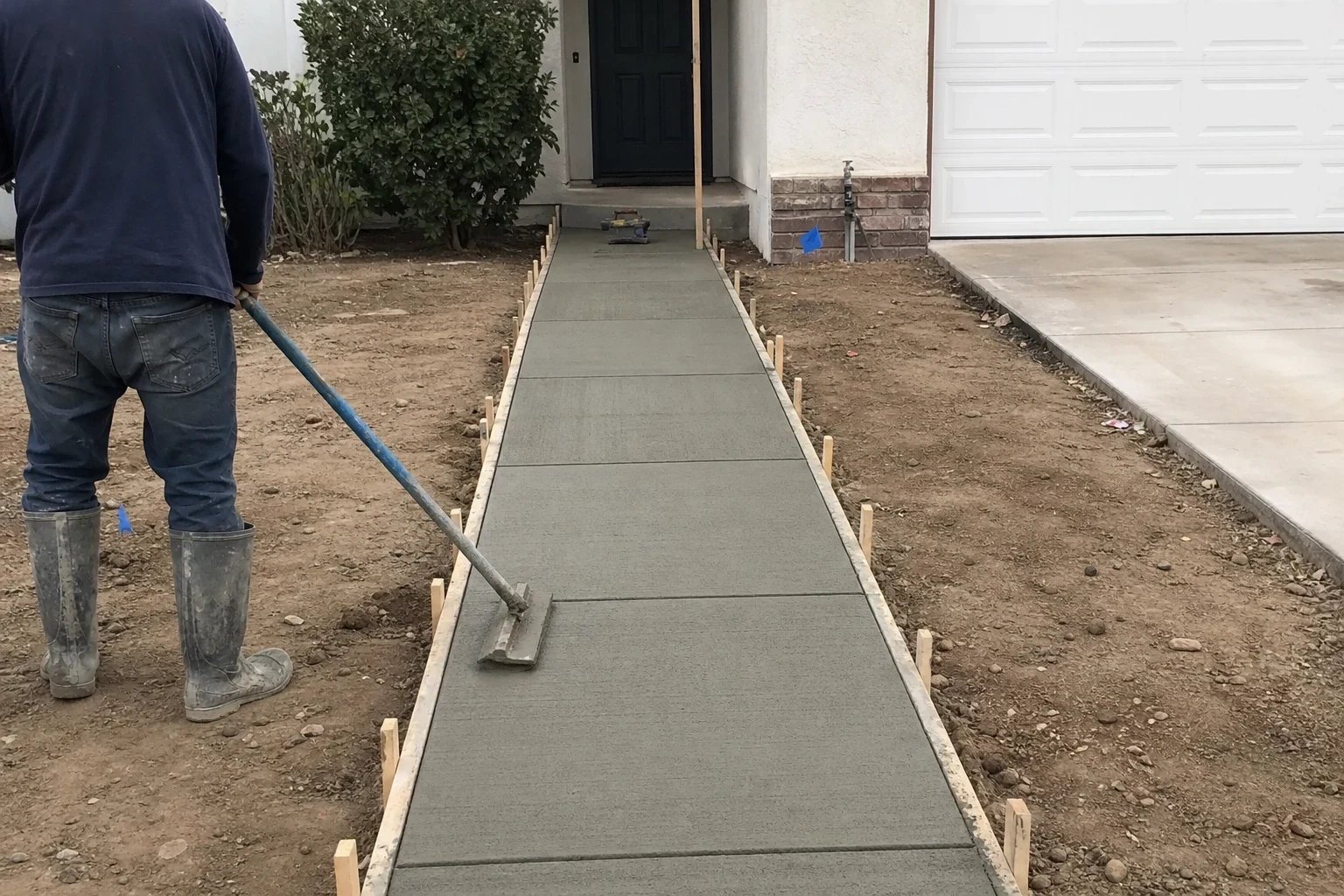
Forms are set so the walk drains away from your house, usually a slight fall to one side. We can widen a narrow path so two people can walk side by side, or curve it around plantings.
Pour, finish and joints
We place the concrete, finish the surface and cut control joints at regular spacing. Joints give the slab a planned place to crack so the cracks stay straight and hidden in the line.
Finish options
A light broom finish gives good grip when wet. Exposed aggregate, colored concrete or stamped concrete are options if you want the walk to match a patio or driveway.
Signs It Is Time for a New Walkway
Raised edges that catch toes
When one slab sits higher than the next, it becomes a trip spot. Small lips tend to grow as roots and soil keep pushing.
Cracks running every direction
A crack along a joint is normal. Spiderweb cracks across the middle of slabs usually mean the base under them has failed.
Water pooling or flowing toward the house
A walk that holds puddles or sends rain toward your foundation was not graded right or has sunk. New concrete with proper slope fixes the flow.
Sunken or tilted sections
Slabs that have dropped or leaned point to soft or washed-out soil underneath. Replacing them means fixing that ground too.
A path that no longer fits
Maybe the walk is too narrow, ends in the lawn or does not reach a new gate. Redoing it lets you put the path where people actually walk.
How the Job Runs
- 1
Phone call and site visit
You call, tell us what is going on, and we set a time to look at the path. We measure, check the slope and point out what is likely causing the damage.
- 2
Written estimate in plain terms
You get a line-item estimate that shows removal, base, concrete and finish separately. If a city permit is needed for a public sidewalk, we tell you and handle it.
- 3
Tear-out and prep day
We remove the old walk, dig, compact the base and set forms. We keep entry open where we can and let you know the best way in and out.
- 4
Pour and finish
Most walkways are poured and finished in a single day. We cut joints, clean up and tape off the area.
- 5
Curing and first use
Foot traffic is usually fine after a day or two. We explain how long to wait before heavier loads, like a loaded wheelbarrow, and how to keep the surface damp in hot, dry weather.
What Moves the Price
Every walkway is priced on what it takes to build it right. Two paths the same length can cost different amounts depending on what is underneath and how we get to them. We explain each line on the estimate so nothing is a surprise.
- Length, width and thickness
- More square footage means more concrete and labor. A wider path or a thicker slab adds material.
- Removal of the old walk
- Thick concrete, rebar in the old slab or a long carry to the truck all add time.
- Soil and roots
- Soft clay, tree roots or low spots need extra digging and base material. We show you what we find before we change anything.
- Finish and shape
- A plain broom finish costs the least. Curves, color, exposed aggregate or stamping add steps and materials.
- Permits and access
- A public sidewalk along the street usually needs a city permit. Tight side yards or steps along the path can slow the work.
Walkway and Sidewalk Questions
Something not covered here? (714) 942-4542
Do I need a permit for a new walkway?
A walkway on your own property usually does not. The public sidewalk along the street belongs to the city, so work there typically needs a permit and has to meet city specs. We check this at the site visit and tell you which applies.
How thick should a walkway be?
Most residential walkways are poured about four inches thick on a compacted gravel base. If cars or carts will cross part of the path, we thicken that section. The base matters as much as the slab.
Will the new concrete crack?
Concrete shrinks as it cures, so some cracking is normal. Control joints guide those cracks into straight lines where you barely notice them. A good base and proper slope keep the slab from the kind of cracking that tilts or lifts it.
Can you work around my tree?
Often, yes. We can curve the path away from the trunk or leave extra room for roots. Cutting large roots can harm the tree, so we talk through the tradeoff with you first.
Can my walkway match my driveway or patio?
Yes. We can match a broom finish, use the same color or tie in stamped concrete. If your driveway is getting redone too, pouring both close together makes matching easier.
Ready for a Path You Do Not Have to Watch Your Step On
Tell us about your walkway or sidewalk and we will set a time to look at it. You will get a clear explanation of what is wrong and what a new one involves.