ServicesConcrete Slabs
Concrete Slabs in Placentia
A slab looks simple. It is a flat piece of concrete. But how long it stays flat depends on the dirt under it, the gravel base, the thickness and the steel inside. We pour slabs for sheds, hot tubs, equipment and workshops, and we explain each choice before we start.
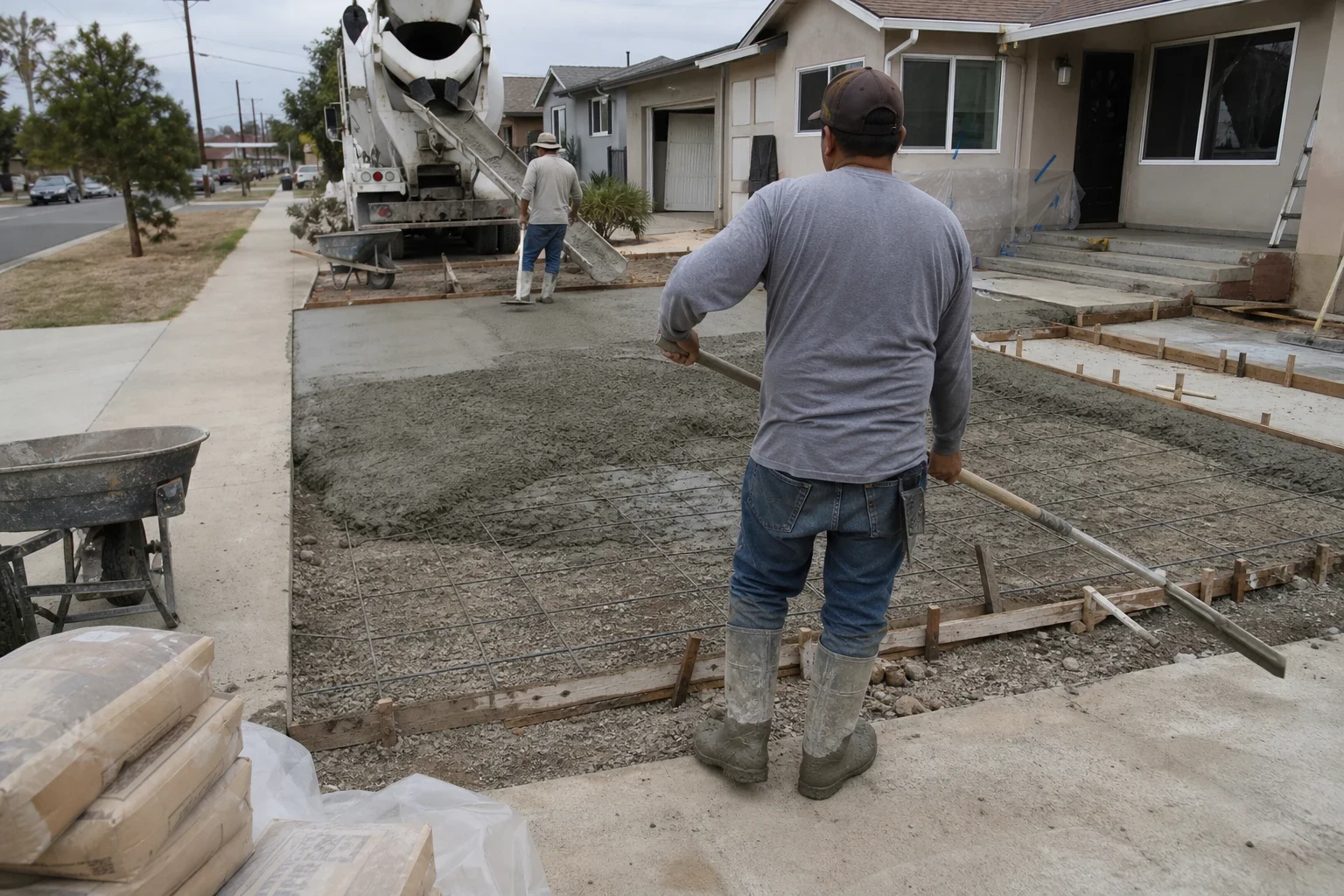
What a Slab Is and When You Need One
A slab is a level pad of concrete that holds something up. Most of the slabs we pour at homes are for a storage shed, a hot tub, an AC condenser or pool equipment, a workshop, or a spot for trash bins. Some are a plain open pad you can use however you like.
The right slab depends on the load. A shed full of garden tools is not the same as a filled hot tub, which can weigh several tons. So the first thing we ask is what is going on top, and the second is whether anything will drive onto it.
If you want a bigger outdoor space instead of a single pad, our Patios or Concrete Backyards pages are a better fit. If the slab is inside a garage, see Concrete Garage Floors.
What Goes Into Every Slab We Pour
- Digging out to firm soil
- We remove grass, roots and loose fill until we hit soil that will not settle. Many yards around here have clay that swells when wet and shrinks when dry, so we do not pour on soft dirt.
- A compacted gravel base
- We spread crushed base rock and compact it in layers with a plate compactor. This gives the slab an even bed and helps water drain away instead of sitting under the concrete.
- The right thickness
- Four inches is common for sheds and light use. Hot tubs, heavy equipment and anything with wheels usually get five or six inches. We tell you which one and why.
- Steel reinforcement
- We place rebar or wire mesh and hold it up on small supports so it sits in the middle of the concrete, where it does its job. Steel lying on the dirt does very little.
- Control joints and a level finish
- Concrete shrinks as it cures, and some cracking is normal. We cut or tool joints so cracks form in straight lines where we want them. The top is finished flat, with a slight slope for drainage unless the use calls for dead level.
- Forms out and cleanup
- After the pour sets, we pull the forms, backfill the edges and haul off the dirt and scraps.
Signs It Is Time for a New Slab
Your shed sits on dirt or blocks
Wood floors on bare ground soak up moisture and rot. Concrete blocks shift over time and the door stops closing right. A slab gives the shed a dry, level floor.
A hot tub is on the way
Most hot tub makers want a flat, solid base that can carry the full weight with water and people in it. Pavers and decks often are not enough. Plan the slab before delivery day.
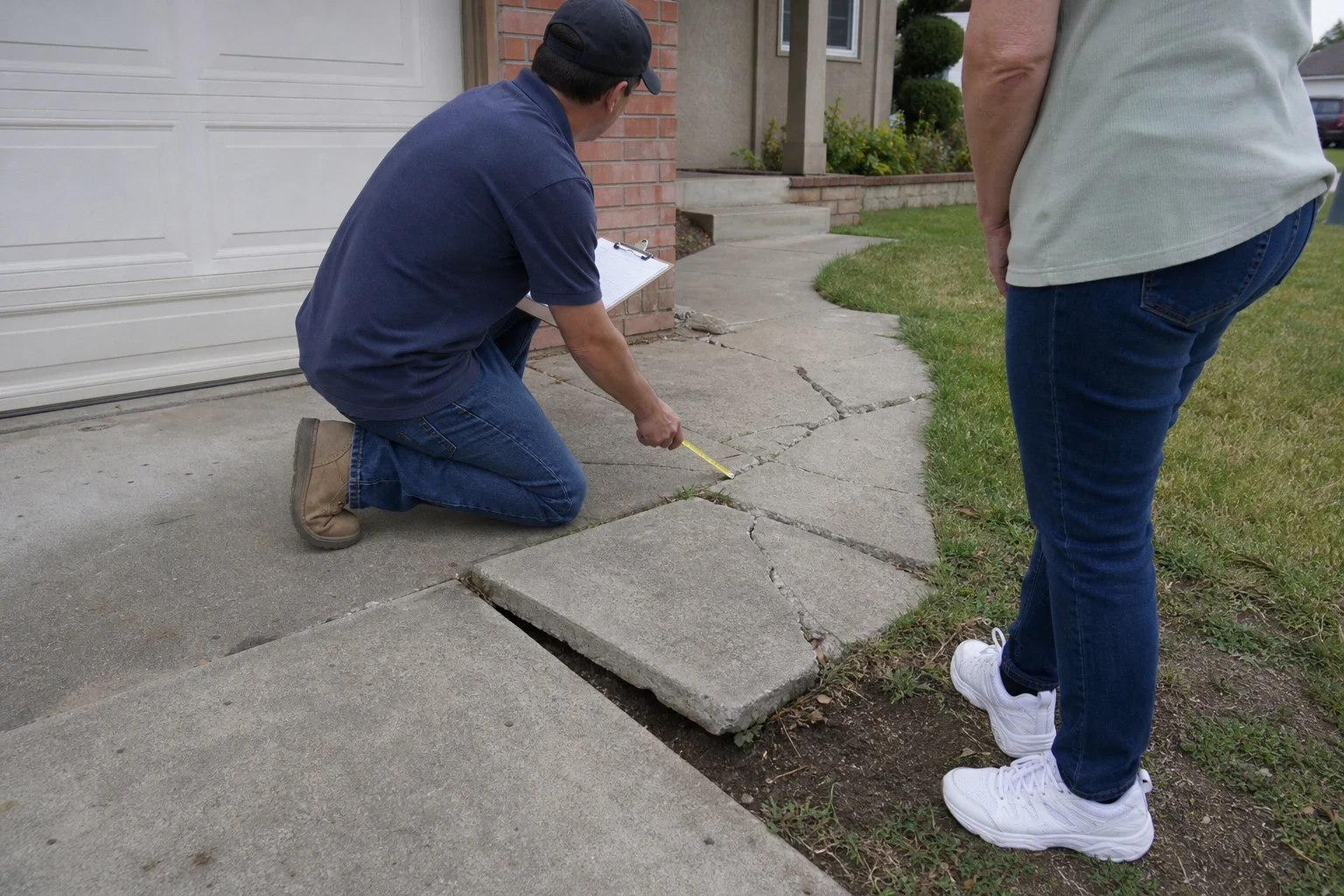
The old pad has sunk or tilted
If an old slab has dropped at one corner, broken into pieces or lets water pool against your home, tearing it out and pouring new on a proper base is usually the cleaner answer.
Equipment is sitting crooked
AC units and pool pumps run best when level. A pad that has settled can strain them and pull on the lines.
You want a usable spot that stays clean
A side area or back corner that turns to mud or weeds can become a solid pad for bins, bikes or a work bench.
How a Slab Job Goes
- 1
Talk it through by phone
You tell us the size, what goes on top and where it sits. We ask about access, slope and drainage. Then we set a time to look at the spot.
- 2
Look at the site and explain the plan
We check the soil, the grade and how a truck or wheelbarrow gets in. You get a written quote that spells out size, thickness, base depth and steel, so you can compare it fairly. If the slab needs a permit, we tell you and pull it.
- 3
Prep day
We dig, haul off the soil, set and level the forms, lay and compact the base, and place the steel. Small pads can be prepped and poured the same day.
- 4
Pour and finish
The concrete goes in, gets leveled and finished, and the joints go in. On hot days we may start early and keep the surface damp so it does not dry too fast and weaken.
- 5
Curing and handoff
You can usually walk on it in a day or two. We tell you when it is ready for a shed, a hot tub or equipment, which is often about a week, and when it reaches full strength.
What Moves the Price of a Slab
Every slab is priced on its own details. The size matters, but so does what is under it and how hard it is to reach. We break the quote into parts so you can see where the money goes.
- Size and thickness
- More square feet and more inches mean more concrete, more base rock and more labor. Going from four to six inches adds real material.
- What is there now
- Bare dirt is the easy case. Removing an old slab, roots or a lot of soil adds hours and dump fees.
- Access to the spot
- If a concrete truck can reach the forms, the pour is quick. A tight side yard or a backyard behind the house may need a pump or wheelbarrows.
- Steel and concrete mix
- Rebar costs more than mesh, and a stronger mix costs more than a standard one. We only suggest the upgrade when the load calls for it.
- Slope and permits
- A sloped yard may need deeper forms or a small step-down. A permit, when needed, adds fees and an inspection visit.
Slab Questions We Hear Most
Something not covered here? (714) 942-4542
How thick does my slab need to be?
For a shed or light use, four inches on a good base is usually fine. For a hot tub, heavy machinery or anything you drive on, we go five or six inches with rebar. We also check the hot tub maker's base requirements so you stay within them.
Will my new slab crack?
Some fine cracking is normal as concrete shrinks. Our job is to control where it happens with joints, and to keep the slab from settling with good soil prep and a compacted base. Wide cracks that open and shift usually point to a bad base, which is what we work to avoid.
Do I need a permit for a slab?
A plain pad often does not, but it depends on size, location and what will sit on it. A slab under a structure or near a property line may need one. We check with the city before we start and handle the permit if it is required.
How soon can I put a shed or hot tub on it?
Foot traffic is usually fine after a day or two. For a shed or a hot tub, we suggest waiting about a week. Concrete keeps gaining strength for close to a month, so heavy loads get the most patience.
Can you pour a slab where my old one is?
Yes. We break out the old concrete, haul it away, fix the base and pour a new slab. We do not patch old slabs, so if yours is failing, a fresh pour is what we offer.
Ready to Plan Your Slab
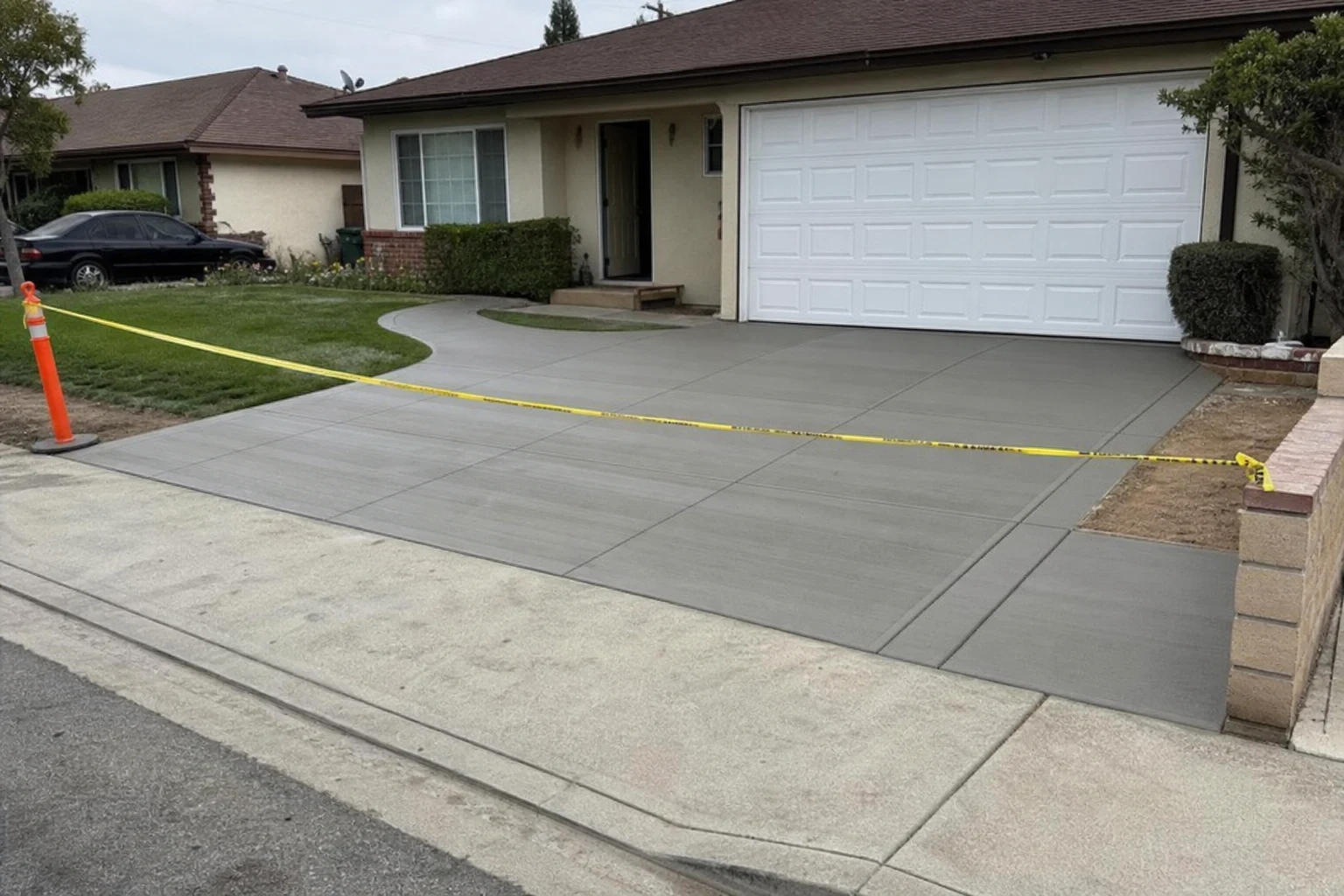
Tell us what is going on top and where it sits. We will explain the thickness, base and steel it needs and set up a time to see the spot.