ServicesDriveways
Concrete Driveways in Placentia
We tear out worn driveways and pour new ones that hold up to daily parking. Before any work starts, we walk you through thickness, steel, joints and finish in plain words. You know what you're paying for and why.
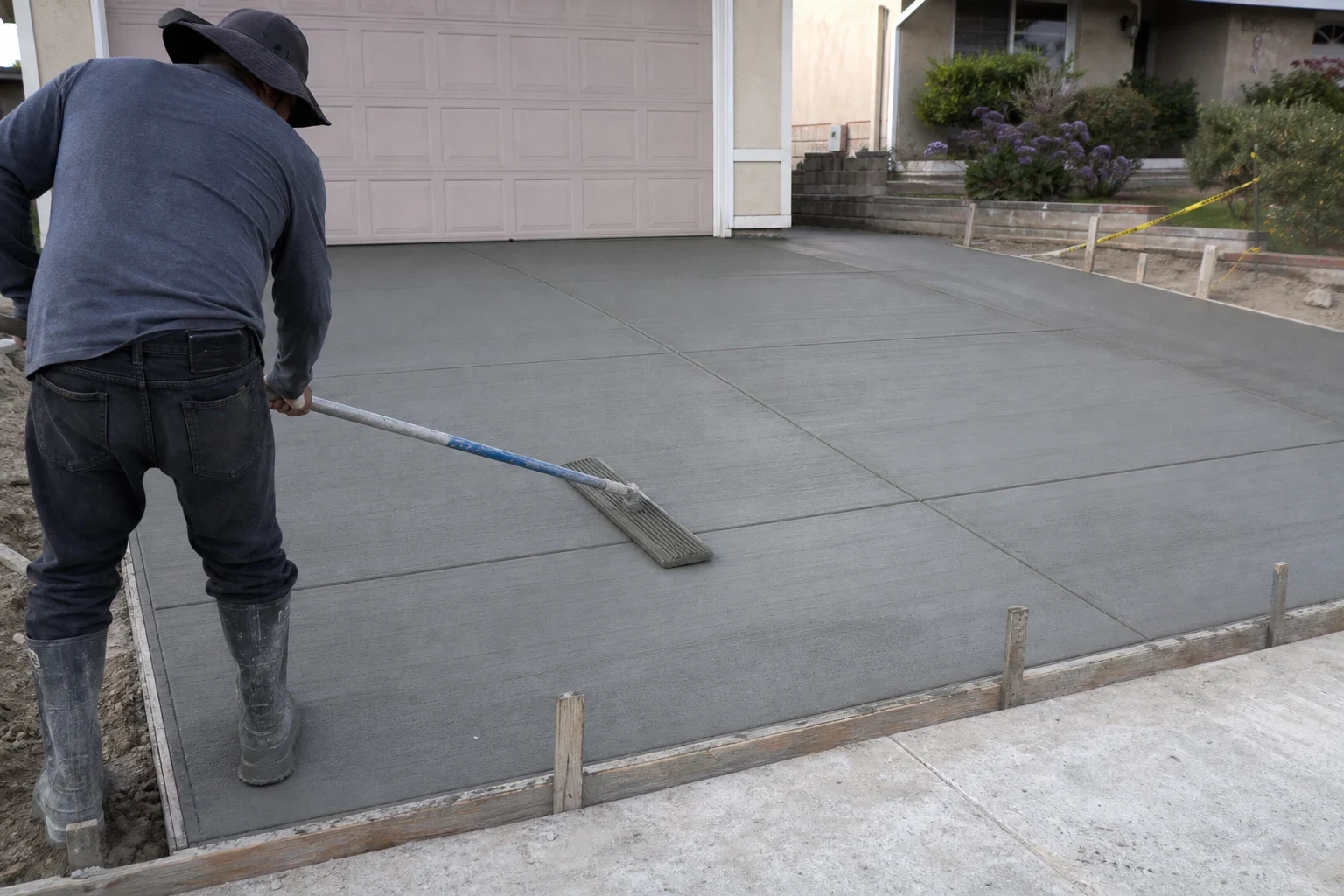
A new driveway, start to finish
A driveway is mostly the part you never see. The gravel base, the steel inside and where the joints go decide whether the slab stays flat for decades or cracks in a few years. The top finish is the last step, not the main one.
We handle full driveway replacement and new driveways, including widening an existing one. On the first visit we measure, look at drainage and check how the old slab failed. That tells us what the new one needs. Then we explain each option and what it changes, so you can choose without guessing.
Many homes in Placentia still have their original driveways. When those slabs have settled or broken into pieces, a new pour on a proper base is usually the right call.
What the job includes
- Tear-out and haul-away
- We break up the old concrete, load it out and take it away. You won't be left with a pile of rubble on the lawn.
- Grading and a compacted base
- We grade the soil so water runs away from your garage and house. Then we lay crushed rock, usually about four inches, and compact it in layers. This base is what keeps the slab from sinking.
- Steel reinforcement
- Most driveways get rebar set on a grid and held up on small blocks, so the steel sits in the middle of the slab where it does its work. We tell you the bar size and spacing before we pour.
- Forms and the right thickness
- Four inches is standard for cars. If you park a heavy truck or a work van, we suggest going thicker at the spots that carry the weight, and we explain why.
- Control joints
- Concrete shrinks as it dries, and it will crack somewhere. We cut joints about a quarter of the slab depth, spaced so the cracks happen in the joint and not across the middle.
- Finish and cleanup
- A broom finish gives good grip and is the most common choice. If you want a pattern or color, see our stamped concrete page. We clean up the street and the edges when we leave.
Signs it's time for a new driveway
Cracks that keep widening
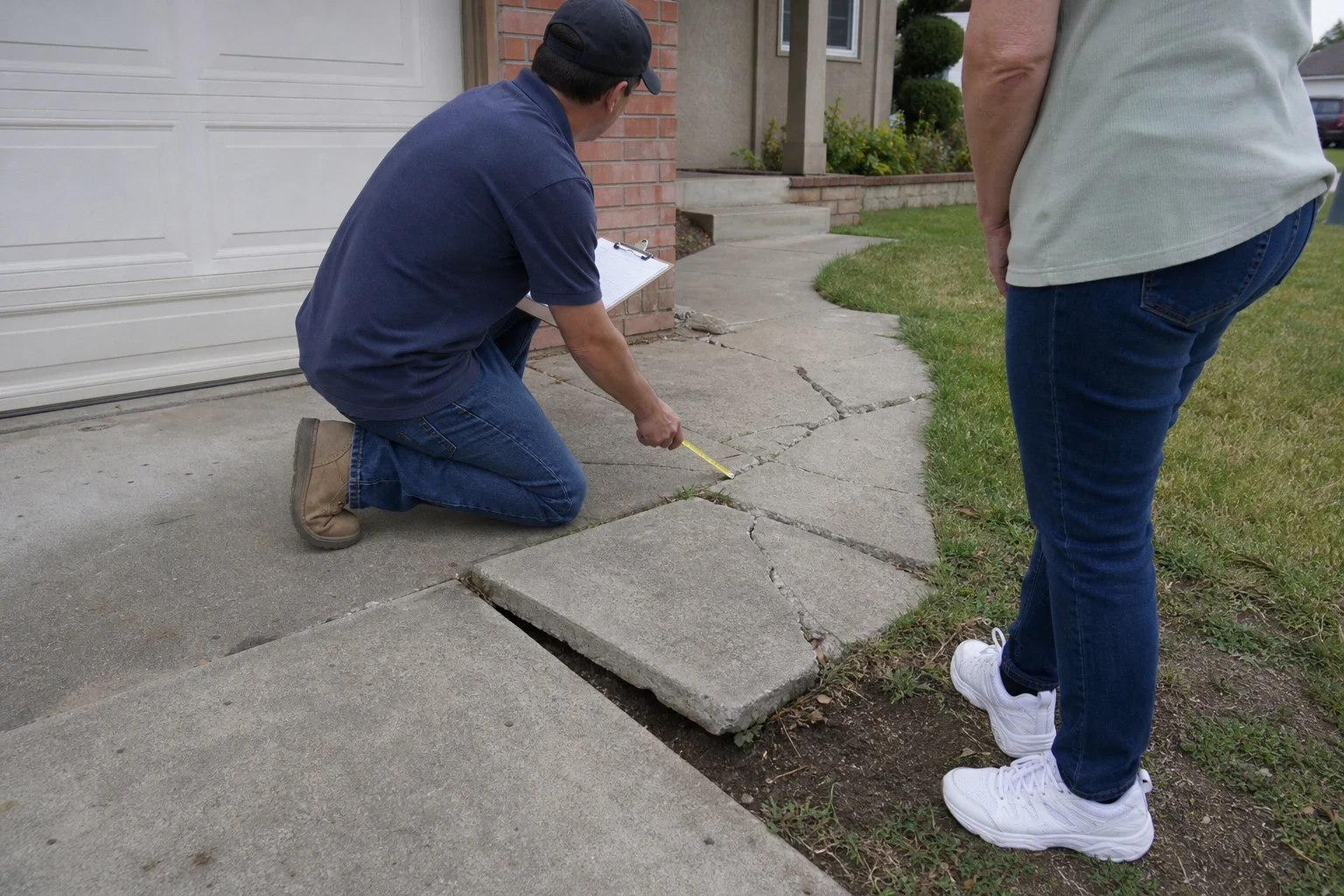
Hairline cracks are normal. Cracks you can fit a coin into, or ones where one side sits higher than the other, mean the base underneath has moved.
Water pools near the garage
If rain runs toward your house instead of away, the slab has settled the wrong way. That water can find its way under the garage door or into the footing.
Sunken or tilted sections
When pieces drop or tip, the soil below has washed out or was never packed well. Pouring on top of that won't last.
Trip edges and broken corners
Raised lips where slabs meet catch feet and tires. Crumbling edges along the lawn usually mean the slab was too thin there.
Roots lifting the slab
A nearby tree can push a section up several inches. We can talk about root barriers or routing the new slab around the problem.
How a driveway job runs
- 1
Look and measure
We come out, measure the area and check the slope, the soil and the curb. We also ask how you use the driveway, since an RV or a work truck changes the plan.
- 2
Explain the options
You get a written estimate with each part listed: tear-out, base, steel, thickness and finish. If the curb approach changes, we tell you when the city needs a permit and we handle pulling it.
- 3
Demo and prep day
Crews break out the old slab, haul it away, grade and compact the base, then set forms and steel. Expect noise for part of the day and a driveway you can't use until it cures.
- 4
Pour and finish
The truck arrives, we place and level the concrete, finish the surface and cut the joints. Most driveways are poured in one day.
- 5
Curing and first use
You can walk on it after a day or two. We ask you to keep cars off for about a week, and heavy trucks off a while longer. Concrete keeps gaining strength for about a month.
What moves the price
Every driveway is priced from its own measurements and conditions. We list each line in the estimate so you can see where the money goes. Here are the things that change it most.
- Size and thickness
- Square footage is the biggest driver. Going thicker for heavy vehicles adds concrete and labor.
- Tear-out and access
- A thick old slab with steel inside takes longer to break out. Tight access may mean smaller equipment and more hand work.
- Soil and base work
- Soft or clay-heavy soil may need to be dug out and replaced with more rock. We tell you after we look, not after we start.
- Finish and extras
- A broom finish costs the least. Color, stamped borders, wider aprons or drain lines add to it.
- Permits
- Work at the curb or sidewalk usually needs a city permit, which adds a fee and some time to the schedule.
Driveway questions we hear
Something not covered here? (714) 942-4542
How long until I can park on my new driveway?
Plan on about seven days for regular cars. You can walk on it in a day or two. Heavier trucks and RVs should wait longer, and we'll give you a date for your slab.
Will my new driveway crack?
Concrete shrinks as it cures, so some cracking is normal. Our job is to control where it happens. Proper joints, a packed base and steel keep cracks thin and inside the joint lines.
Do I need rebar or is wire mesh fine?
Wire mesh often ends up lying on the dirt where it does little. Rebar held up on blocks stays in the middle of the slab. For driveways we usually recommend rebar and explain the cost difference so you can decide.
Should I seal my driveway?
It's optional on a plain broom finish. A sealer helps against oil stains and makes cleanup easier. On colored or stamped concrete it also keeps the color from fading in the sun.
Can you make my driveway wider?
Yes. We can add width along one or both sides and tie the new section in. If it reaches the curb, a permit is usually needed and we take care of it.
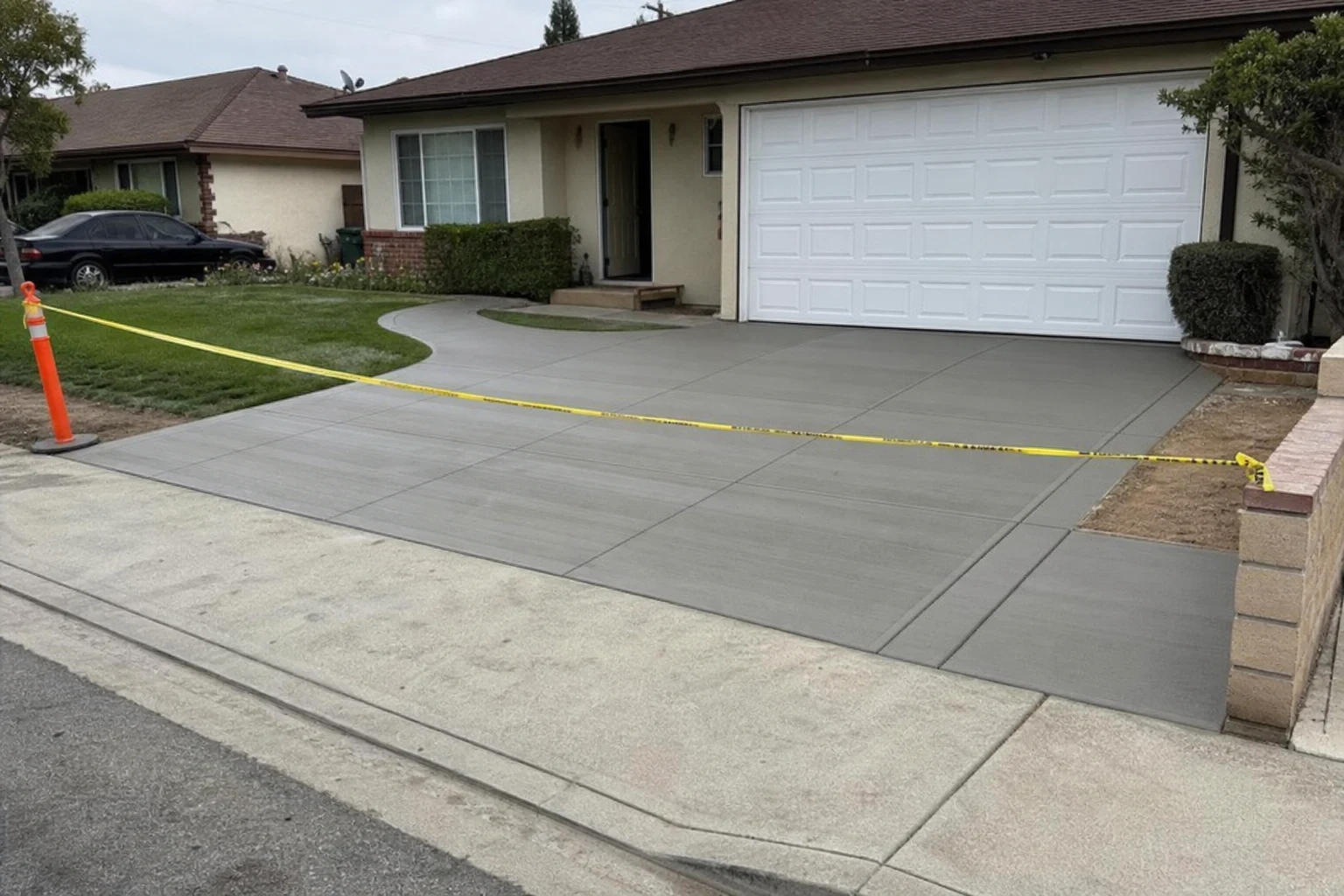
Ready to talk about your driveway
Tell us how you use it and what's wrong with the one you have. We'll explain what it needs and set a time to come measure.