ServicesPatios
Concrete Patios in Placentia
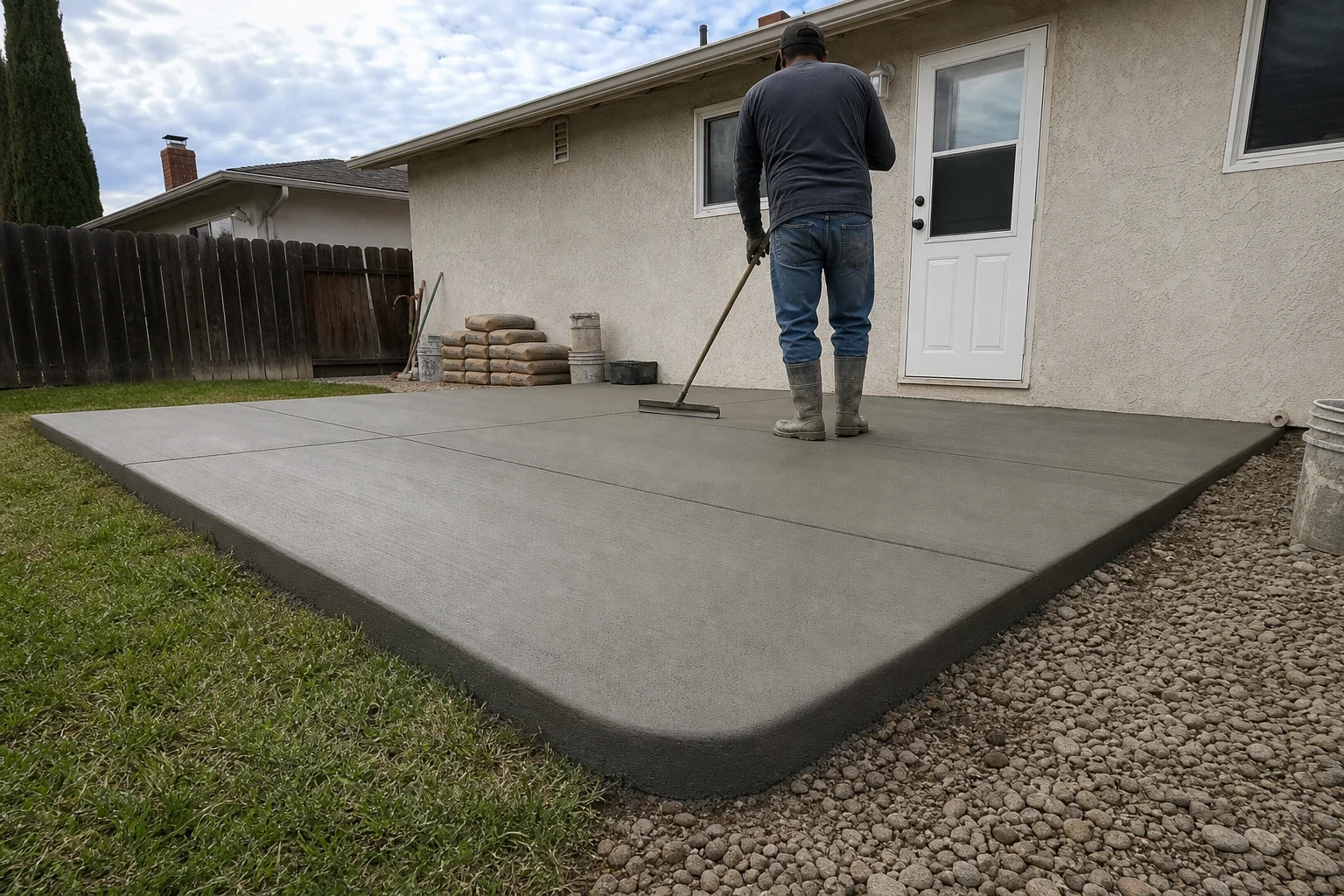
We pour new concrete patios that drain away from your home, sit on a properly compacted base and have joints where the cracks want to go. Before any work starts, we walk you through each choice, from thickness to finish, so nothing is a surprise.
What a Good Patio Actually Needs
A patio looks simple. It is a flat slab out back. But most patios that crack, sink or hold water failed because of what happened before the concrete showed up. Poor base prep, no slope and joints in the wrong place cause most of the trouble we see on older slabs.
We build new patios and replace worn-out ones. That means digging out to the right depth, compacting a gravel base, setting forms with a gentle fall away from the house, adding reinforcement and cutting control joints on a plan. We explain each step as we go, so you know why it matters and can make your own calls on finish and size.
A patio is the right call when you want a clean, level place for a table, a grill or a few chairs, and you want it to last. If you are thinking bigger, our concrete backyards page covers full yard layouts, and stamped concrete covers decorative patterns.
What Your Patio Job Includes
- Site check and layout
- We measure the area, check how water moves across the yard and mark the outline with you. You see the size and shape before anything is dug.
- Demo and haul-off
- If an old slab, pavers or turf are in the way, we break them out and haul the debris away. You are not left with a pile of rubble on the side of the house.
- Excavation and compacted base
- We dig to depth and lay a gravel base, then compact it with a plate compactor. A firm base is what keeps a slab from settling unevenly over the years, especially on the clay soil common around here.
- Forms, slope and reinforcement
- Forms are set so the finished surface falls away from your home, usually about a quarter inch per foot. We place rebar or wire mesh on supports so it ends up inside the slab, not lying at the bottom.
- Pour, finish and joints
- We pour, screed and finish to the texture you picked, such as a broom finish for grip or a smoother trowel finish. Control joints are tooled or saw cut so shrinkage cracks follow straight lines.
- Cleanup and cure guidance
- We pull forms, clean up and tell you exactly when you can walk on it and when furniture can go back.
Signs It Is Time for a New Patio
Water runs toward the house
If rain pools against your back wall or flows toward the slider, the slab was poured flat or has tipped. A new patio with proper slope sends that water out to the yard.
Sections have sunk or lifted
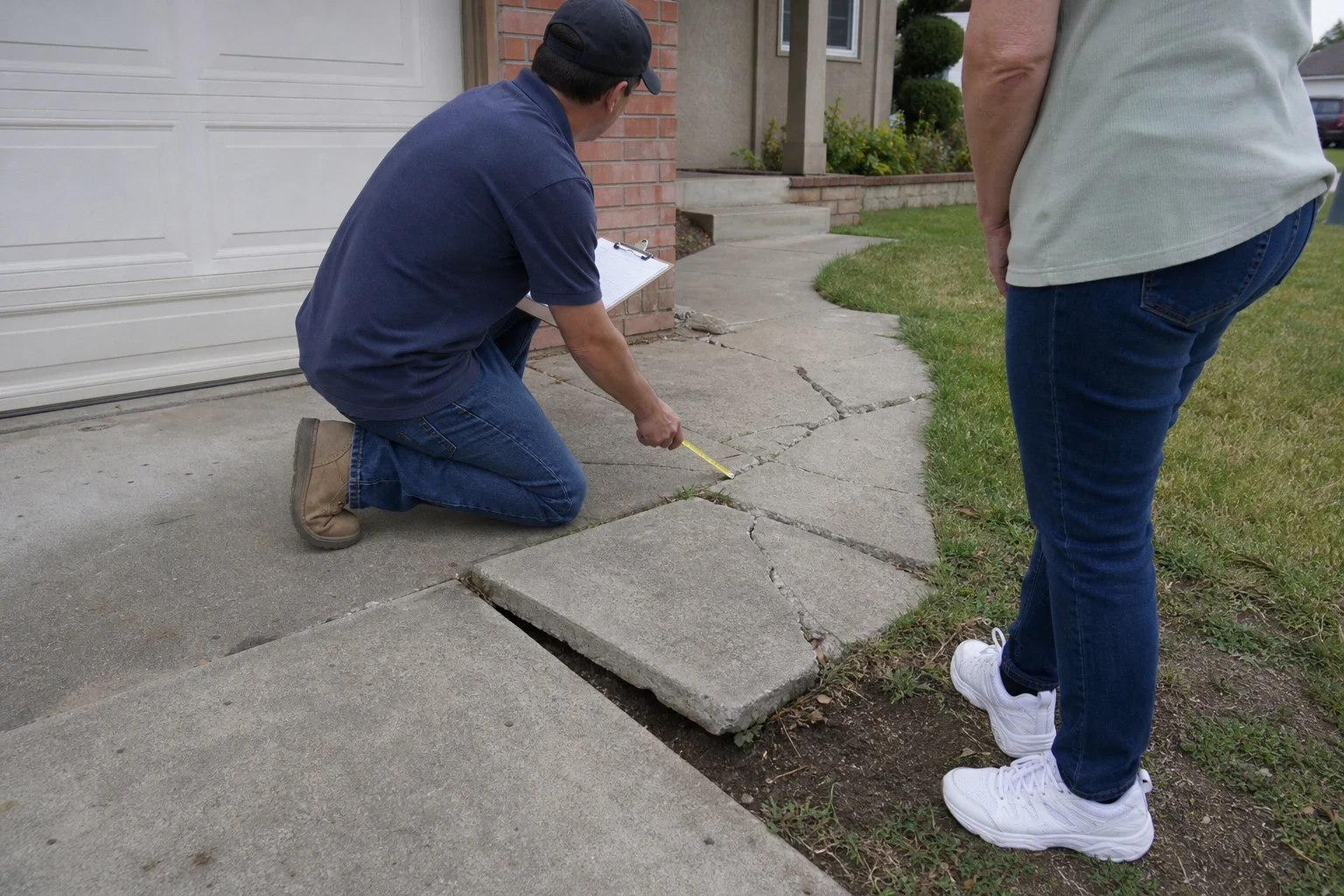
Slabs that rock, step up or drop at the joints are a trip hazard. This usually points to a weak base, and the fix is to tear out and start with a better one.
Cracks wander all over
Random cracks running across the slab mean the joints were missing or too far apart. Once a patio is broken up like that, a fresh pour is often cleaner than living with it.
Dirt or grass that never holds up
A patch of yard that turns to mud in winter and dust in summer is a good candidate for a slab. You get a usable space all year.
Pavers or old brick shifting
Loose pavers, weeds in every gap and an uneven surface can be swapped for one solid slab that needs very little upkeep.
How Patio Day Goes
- 1
Phone call and walk-through
You call, tell us what you have in mind and we set a time to look at the space. On site we talk size, finish, thickness and drainage, and point out anything that could affect the job, like roots or a low spot.
- 2
Written estimate
You get a written estimate that lists the work line by line: demo, base, concrete, reinforcement and finish. If a permit applies to your project, we note it and handle it.
- 3
Prep day
We dig out, haul away old material, compact the base and set forms. Many patios are prepped and poured on the same day; bigger ones may take two.
- 4
Pour and finish
The truck arrives, we place and finish the concrete and cut the joints. In hot summer weather we plan pours for the cooler morning hours so the surface does not set too fast.
- 5
Curing and handoff
Foot traffic is usually fine after a day or two. Wait about a week for heavy furniture or a grill, and we will tell you how to keep the slab damp early on so it cures strong.
What Moves the Price of a Patio
We do not quote prices online because two patios of the same size can cost very different amounts. What sits under the ground and how we get to it matter as much as the square footage. Here is what changes the number, so you can read an estimate and know where the money goes.
- Size and thickness
- More square feet means more concrete and labor. Most patios are four inches thick, but a spot for a heavy hot tub or outdoor kitchen may need more.
- Tear-out and access
- Removing an old slab costs more than pouring on bare dirt. A narrow side yard can mean pumping or wheelbarrowing concrete instead of chuting it straight from the truck.
- Soil and grading
- Soft spots, expansive clay or a yard that slopes toward the house all call for extra digging, base material or fill to get it right.
- Finish choice
- A broom finish is the simplest. Exposed aggregate, color or a stamped pattern add materials and finishing time.
- Permits and extras
- Steps, borders, drains or a permit when one is required each add a line to the estimate. We list them separately so you can decide what to keep.
Patio Questions We Hear
Something not covered here? (714) 942-4542
How thick should my patio be?
For chairs, tables and foot traffic, four inches on a compacted base is standard. If you plan a hot tub, a big masonry grill or a pergola with footings, we plan thicker sections or separate footings. We will tell you which applies to your plans and why.
Will my new patio crack?
All concrete shrinks as it cures, so some fine cracking is normal. Control joints are there to make those cracks happen in straight, planned lines instead of across the middle. A good base and proper spacing keep the slab from breaking up.
Should I go with plain concrete or stamped?
Plain broom-finished concrete is the most affordable and gives good grip when wet. Stamped concrete looks like stone or tile but costs more and needs resealing every few years. We can show you both and explain the upkeep on each so you choose with clear eyes.
Can you pour right up against the house?
Yes, with an expansion joint between the slab and the foundation and a slope that carries water away. We also check that the finished height stays below door thresholds and weep screed so water does not get into the wall.
How long before we can use it?
You can usually walk on it in a day or two. Give it about a week before moving heavy furniture or rolling a grill across it. Concrete keeps gaining strength for about a month.
Do you work outside Placentia?
Yes. We pour patios in nearby cities like Yorba Linda, Fullerton, Brea and Anaheim. Our service areas page lists the rest.
Ready to Plan Your Patio
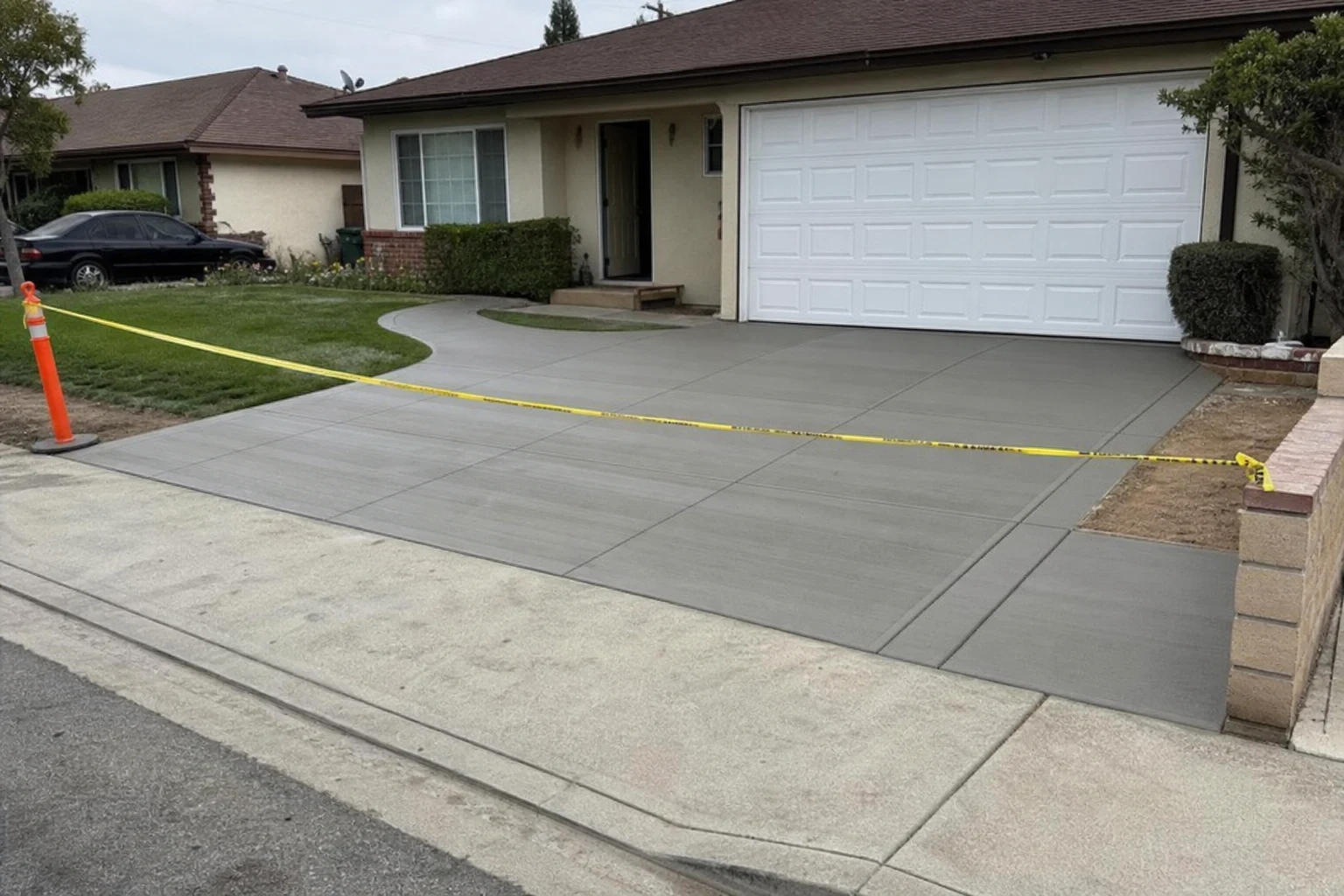
Tell us the size you have in mind and how you want to use it. We will set up a visit, look at the yard and explain your options before you commit to anything.