ServicesSide Yards
Concrete Side Yards in Placentia
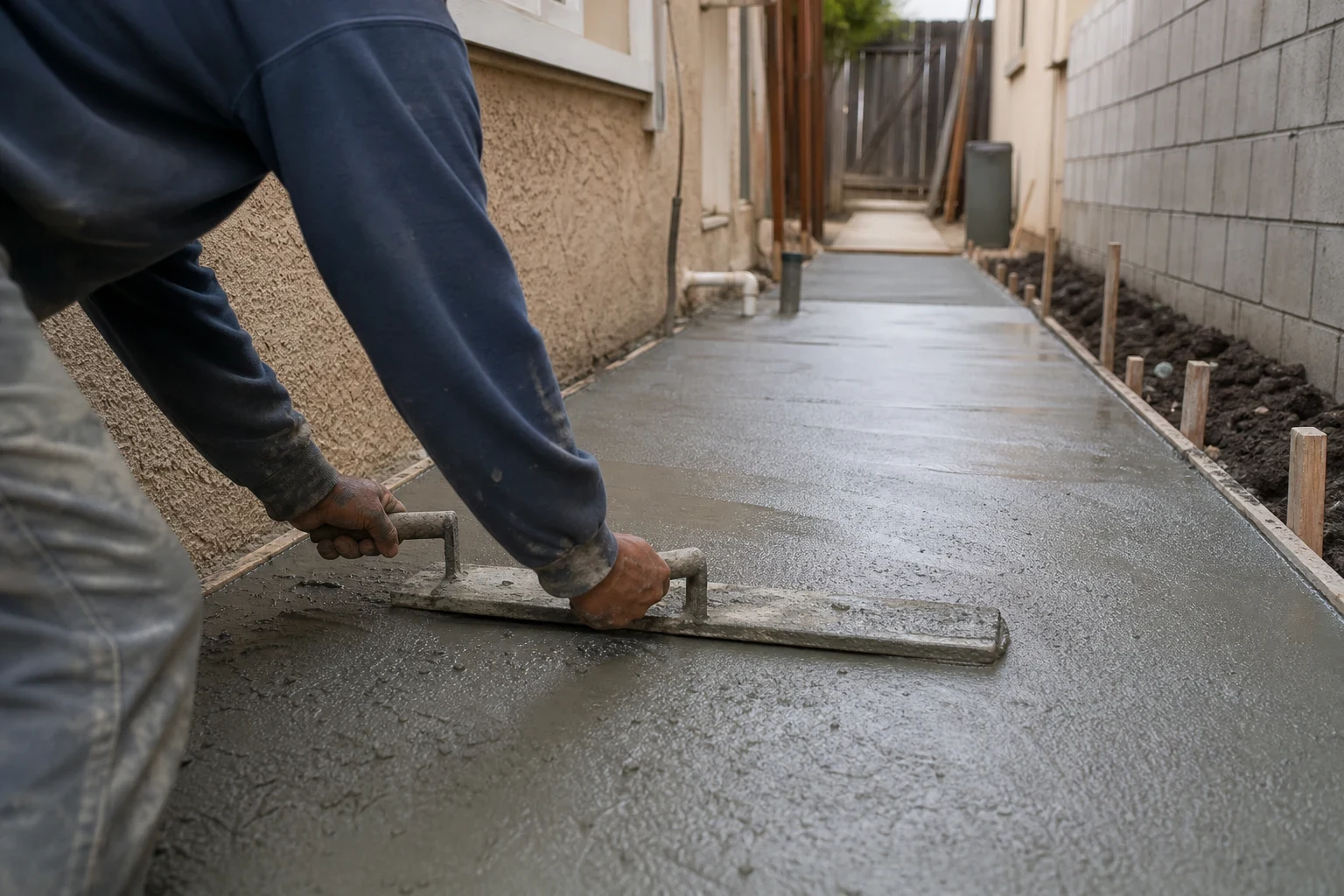
The side yard is the strip most people ignore until it turns to mud, grows weeds or sends water toward the house. We pour side yard slabs that slope away from your home, fit around meters and AC units, and give you a clean path to the back.
What a Side Yard Slab Does for Your Home
A side yard is usually a narrow run between the house and the fence, often four to ten feet wide. It carries foot traffic, trash cans, hoses and sometimes a bike or two. Left as dirt or loose gravel, it tracks mud inside and holds water right against your foundation.
A good slab fixes the water first. We set the grade so it falls away from the house, then tie it into downspouts or an area drain if the yard needs one. The clay soil common around here swells when wet, so keeping water off it matters.
We'll walk you through each choice in plain words: how thick, what reinforcement, which finish, where the joints go and why. You decide with the facts in front of you.
What the Work Includes
- Removal of what's there
- We dig out dirt, old gravel, pavers or worn-out concrete and haul it away. Roots and soft spots come out too, so the slab sits on firm ground.
- Grading for drainage
- We slope the base away from the foundation so water runs toward the fence line, the street or a drain. This is the part of a side yard that matters most, and it's the part people skip.
- Room at the stucco line
- Most stucco walls have a metal weep screed near the bottom. We keep the finished concrete below it so the wall can still drain and doesn't wick up moisture.
- Working around equipment
- Gas meters, AC condensers, hose bibs and irrigation lines all live in side yards. We form around them cleanly and leave access where a utility needs it.
- Base, reinforcement and joints
- A compacted base goes down first, then rebar or wire depending on the job. In a long, narrow slab we cut control joints closer together, so any cracking follows a straight line instead of wandering.
- Finish and cleanup
- Most side yards get a broom finish for grip when wet. We clean up forms, spoils and washout before we leave.
Signs Your Side Yard Needs Concrete
Water sits by the house
If puddles linger against the wall after a rain, the ground is sloped the wrong way. That water ends up under your foundation.
Mud on every trip
Rolling trash cans through soft dirt is no fun. If shoes come back caked, a slab will save your floors.
Weeds you fight every season
Gravel and bare dirt grow weeds no matter how much you pull. Concrete ends the fight.
Gravel that keeps moving
Loose rock drifts, sinks and spills onto other surfaces. It also makes wheels hard to push.
Pavers that rock or sink
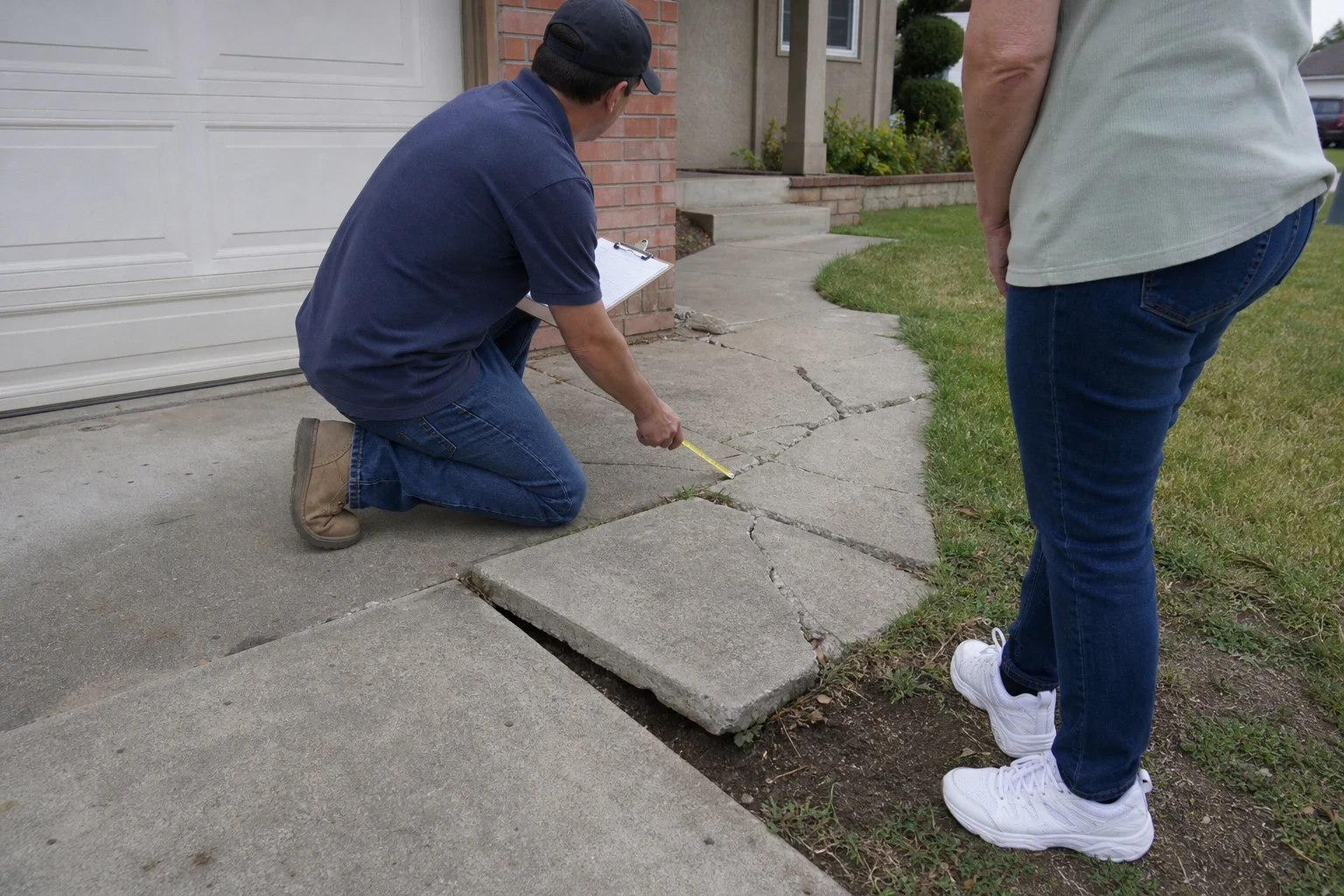
Uneven pavers are a tripping hazard in a tight walkway. If they keep settling, the base under them is gone and a poured slab is often the better fix.
What Moves the Price of a Side Yard
Every side yard is priced on its own measurements and conditions. Size matters, but access and drainage often matter just as much. We'll go over each item so you know where the money goes.
Length and width
More square footage means more concrete, base and labor. A short run along one side costs far less than a wraparound.
Getting concrete in
If a truck can't reach the side yard, we wheel it in or bring a pump. A pump adds cost but saves time and your landscaping.
What comes out first
Hauling dirt is simpler than breaking out old concrete or pavers. Thick roots or buried debris add time.
Drainage work
Area drains, downspout lines or extra grading add to the job. On many lots they are worth it.
Finish choice
A broom finish is the plain, practical option. Stamped concrete or a colored finish costs more and takes longer.
How a Side Yard Job Goes
- 1
Walk the space with you
We measure, check the slope, find the downspouts and note what's in the way. Then we explain what we'd do and why, in everyday terms.
- 2
Dig out and set forms
We remove the old material, grade the base and set wood forms to the right height and fall. If drains are part of the plan, they go in now.
- 3
Base and steel
We compact the base and place the reinforcement on supports so it sits in the middle of the slab, where it does its job.
- 4
Pour and finish
Side yards are tight, so we bring concrete in by wheelbarrow or a line pump. We screed, float, cut joints and broom the surface.
- 5
Cure and clean up
We pull the forms once the concrete sets and clean the area. You get clear guidance on when to walk on it and when to roll cans across it.
Side Yard Questions We Hear
How soon can I walk on my new side yard?
Foot traffic is usually fine after a day or so. Wait several days before rolling heavy trash cans or a loaded wheelbarrow across it. We'll give you the timing for your pour before we leave.
Will the slab cause problems with my stucco?
Not when it's set at the right height. We keep the top of the concrete below the weep screed at the base of the wall so moisture can still escape. Pouring too high is a common mistake we avoid.
Can you pour around my AC unit and gas meter?
Yes. We form around them and leave the space the utility or equipment needs. If a pad is cracked or tilted, we can talk about pouring a new one at the same time.
Do I need a drain or is slope enough?
On a short side yard with good fall, slope alone often works. On long runs, low lots or where downspouts dump into the yard, a drain is the safer choice. We'll tell you which one your yard needs and why.
Can the side yard match my patio or backyard?
It can. Many people pour the side yard with a patio or full concrete backyard so the finish and color line up. Doing it together also saves a second mobilization.
Ready to Fix That Side Yard?
Tell us how long it is, what's in it now and where the water goes. We'll explain your options and give you a quote by phone.