ServicesSteps and Stairs
Concrete Steps and Stairs in Placentia
We build new concrete steps for front entries, back doors and sloped yards. Every riser comes out the same height, the treads are deep enough for a full foot, and the finish holds traction when wet. We explain each choice before anything gets poured.
What New Steps Fix
Steps get more use than almost any concrete at your home. Every trip to the car, every grocery run, every kid running out the door. When one riser is taller than the rest, or a tread tips forward, people trip. That is the real reason most homeowners call us.
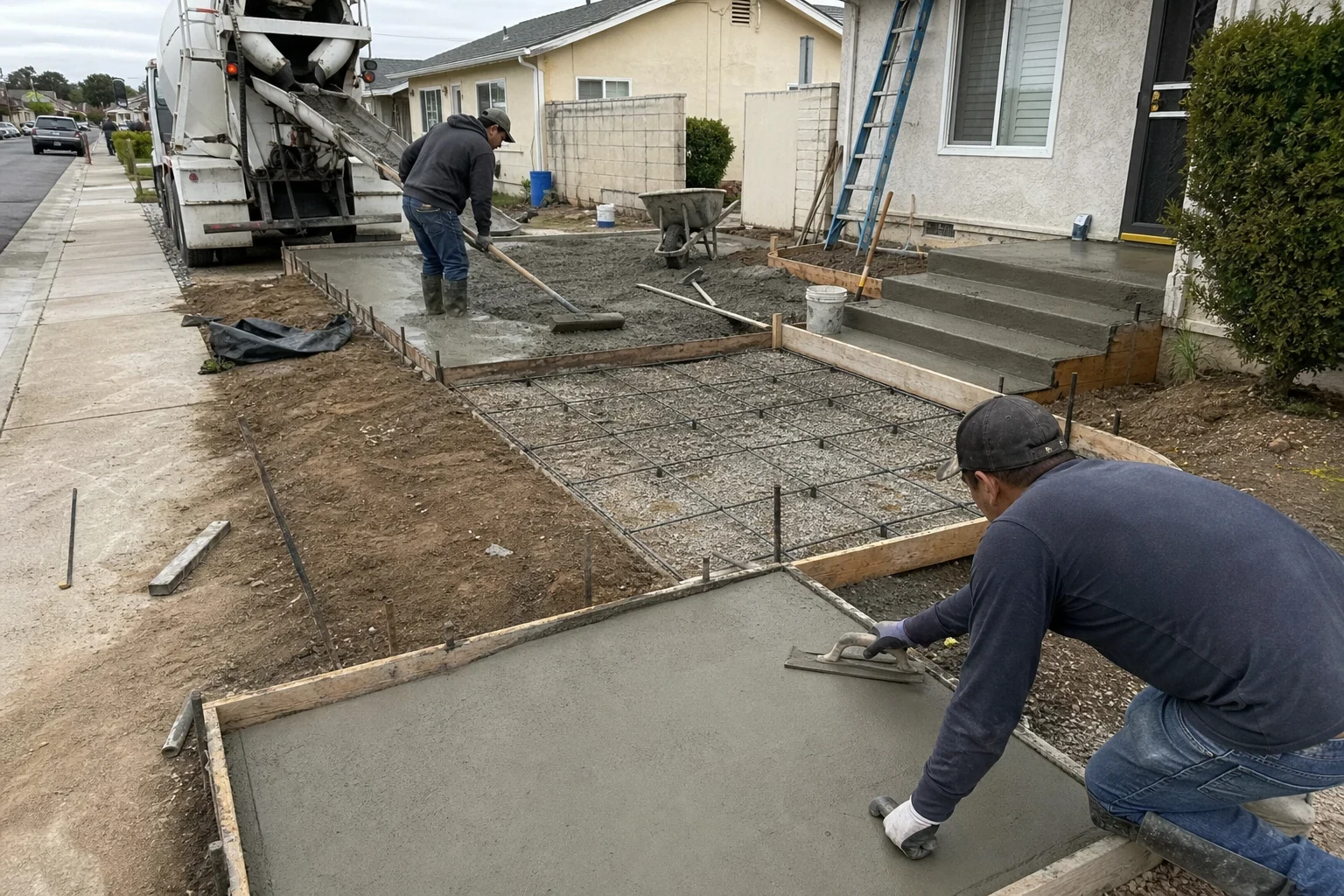
We remove the old steps, set forms so each rise and run is even, tie the new concrete to what it sits against, and give the treads a finish your shoes can grip. If your steps lead down to a patio or walkway, we look at how they meet so you do not end up with a lip at the bottom.
What the Job Includes
Tear-out and haul-off
We break up the old steps, whether concrete, brick or rotted wood, and haul the debris away. You are not left with a pile in the side yard.
Even risers and deep treads
We measure the total drop from the door to the ground and divide it evenly. Residential code allows risers up to about 7-3/4 inches and asks for treads at least 10 inches deep. Most of our steps land comfortably inside those numbers.
A real landing at the door
An exterior door needs a flat landing outside it, not a step right at the threshold. We size the landing so you can stand there and open a screen door without backing down a step.
Steel and anchoring
Rebar goes inside the steps, and where they meet a slab or foundation we drill and set dowels. That keeps the new steps from drifting away from the house over the years.
Finish and edges
A broom finish is the standard for grip. We round the nosing on each step so the edge does not chip. You can also choose color or a stamped pattern to match nearby work.
Handrail prep
Four or more risers usually call for a handrail. We can set sleeves or plan the layout so a rail mounts cleanly once the concrete cures.
Signs It Is Time for New Steps
Steps pulling away from the house
A gap opening between the top step and the foundation means the steps are settling on their own. Water gets in that gap and the problem grows.
Risers that do not match
If guests catch a toe on one step, measure the risers. A difference of more than about 3/8 inch between steps is enough to trip someone.
Treads that tip or hold water
Treads should shed water with a slight forward pitch, not pool it or slope hard toward the yard. Standing water turns slick fast.
Crumbling edges and wide cracks
Spalled nosings and cracks running through the full step usually mean the concrete underneath has given up. Patching the surface rarely lasts.
No landing or no room for a rail
Older entries sometimes put a step right at the door. If that has always felt awkward, new steps are the time to fix the layout.
How the Work Goes
- 1
Look and measure
We come out, measure the total rise and the space you have, and talk through options. You hear what each one means in plain terms, including whether a permit is likely.
- 2
Demo and forms
We remove the old steps and set wood forms for every riser and tread. Rebar and dowels go in. We check the heights again before the truck is scheduled.
- 3
Pour and finish
We pour, tool the edges and brush the treads. On hot days we start early in the morning so the concrete does not set before we can finish it right.
- 4
Strip forms and clean up
Forms come off after the concrete firms up, usually the next day. We clean the site and go over curing with you before we leave.
What Moves the Price
Steps are a small pour with a lot of form work, so labor drives more of the cost than the concrete itself. We give you a line-by-line number by phone after we see the site. These are the things that change it most.
- Number of steps and width
- A three-step entry and a full flight down a sloped yard are very different jobs. Wider steps take more forms and more concrete.
- What comes out first
- Old concrete steps with heavy rebar take longer to break up than a wood stoop. Brick over concrete adds another layer to remove.
- Finish choice
- A broom finish costs the least. Color, a stamped pattern or a smooth trowel finish with a separate traction strip adds time and material.
- Landings and rails
- A larger landing, side walls or handrail sleeves add work. So does tying the steps into a new patio or walkway at the bottom.
- Access and permits
- If the truck cannot get close, we wheel or pump the concrete in. Steps attached to the house may also need a city permit, which adds a fee and an inspection.
Questions About Concrete Steps
Something not covered here? (714) 942-4542
Can you pour new concrete over my old steps?
Usually not. A thin layer on top changes the riser heights, and it tends to crack and pop off because it never really grabs the old surface. Taking the old steps out lets us set every step at the right height on a solid base.
How soon can we use the new steps?
Light foot traffic is usually fine after a day or two. Wait about a week before moving heavy furniture or appliances over them. Concrete keeps gaining strength for about a month, so go easy on the edges early on.
How do we get in and out of the house while you work?
If the steps are at your main door, plan on using another entry for a couple of days. We tell you ahead of time which days the steps will be blocked so you can plan around it.
Do I need a handrail?
Code generally calls for a handrail once you have four or more risers. Even with fewer, a rail helps older family members and visitors. We can plan for one when we set the forms.
Can the steps match my patio or walkway?
Yes. We can use the same color or stamped pattern as nearby concrete. We keep the treads textured enough to grip, since a slick stamped surface on a step is a fall waiting to happen.
Ready for Steps That Feel Right Underfoot
Tell us how many steps you have and where they lead. We will explain your options and set up a time to come measure.