ServicesConcrete Courtyards
Concrete Courtyards in Placentia
A courtyard sits between walls, so water and heat have fewer places to go. We pour new courtyard slabs that slope away from your home, drain where they should, and get a finish you picked after we explained what each one means.
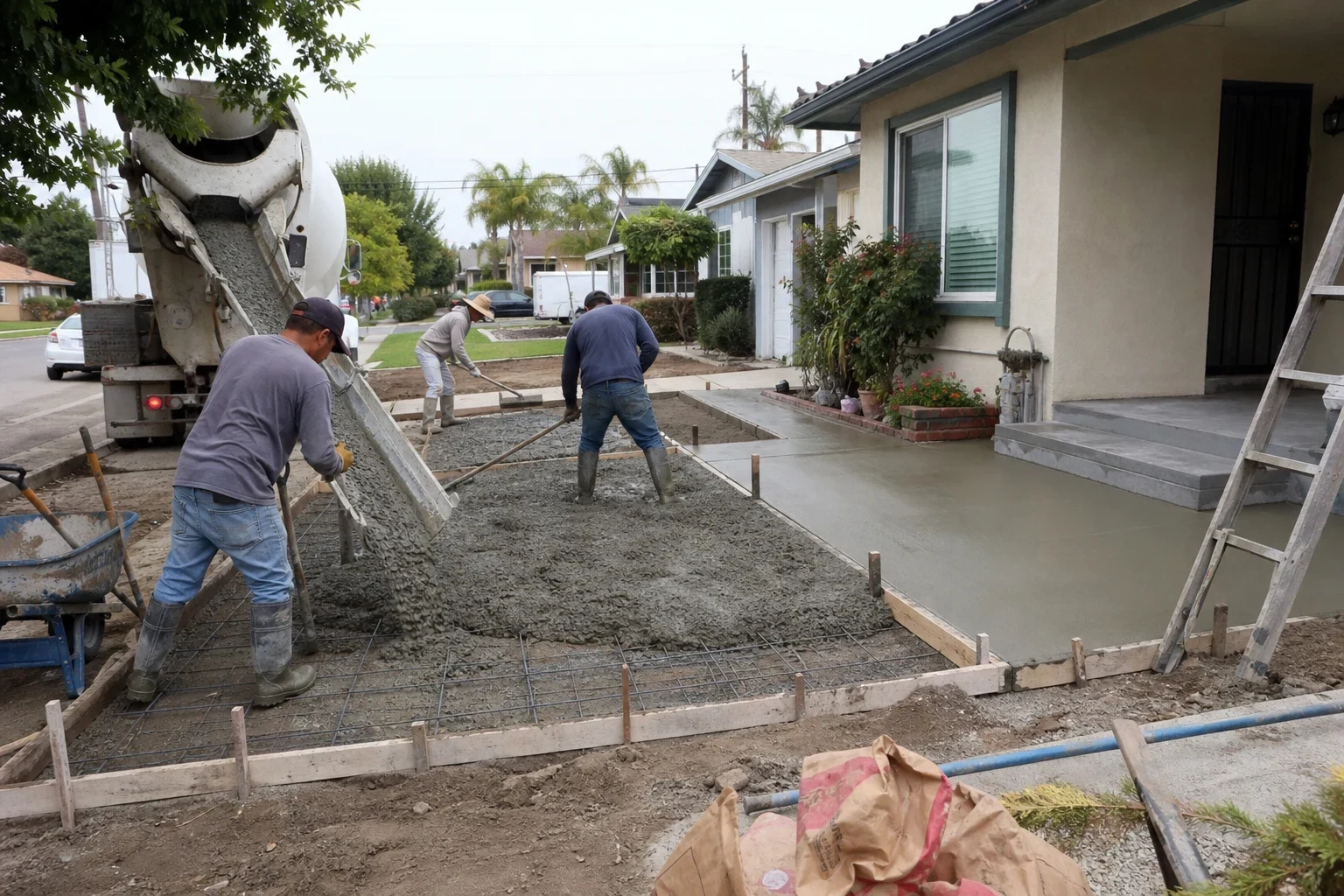
What a courtyard slab needs that an open patio doesn't
A courtyard is boxed in by your home on two or three sides. On an open patio, a little extra rain just runs off into the yard. In a courtyard it has nowhere to go unless we give it a path. So most of our planning goes into slope, drains and how the concrete meets your walls.
We pour new courtyards on bare dirt, gravel, or where old pavers or a tired slab have been torn out. If your project is the whole yard, our Concrete Backyards page covers that. If it's an open slab off the back door, see Patios.
Before we quote, we walk the space with you and explain what we see. You'll know why we recommend a drain, a joint layout or a finish, in plain words.
What the work includes
- Grading for slope
- We set the grade so water runs away from your walls, usually toward a drain or an open edge. It's a small fall you won't notice when walking, but water will.
- Drains and outlets
- When the courtyard is closed on three sides, we plan an area drain or a channel drain and where its pipe will exit. We show you the route before we dig.
- Clearance at stucco walls
- Stucco walls have a metal strip at the bottom called a weep screed. It lets moisture out of the wall. We keep the new slab low enough that the screed stays clear.
- Isolation and control joints
- A foam strip goes where the slab meets your home so the two can move separately. Control joints are cut in a planned pattern so cracks, if they come, follow the lines.
- Finish and color
- Broom, smooth trowel, sand finish, exposed aggregate or a pattern from our Stamped Concrete work. Lighter colors stay cooler underfoot in a courtyard that holds the afternoon sun.
- Cleanup
- Forms come out, spoils get hauled off, and we rinse the walls and walkways we worked near.
Signs your courtyard is ready for new concrete
Water sits against the walls
Puddles along the house after rain mean the ground slopes the wrong way. That moisture can find its way into stucco and wood framing over time.
Dirt or gravel that won't stay put
Gravel gets kicked into the house and dirt turns to mud in winter. A slab gives you a floor you can sweep.
Pavers sinking or rocking
Pavers on a thin base settle into dips and trip hazards. We pull them out and pour on a compacted base.
An old slab that has lifted or broken up
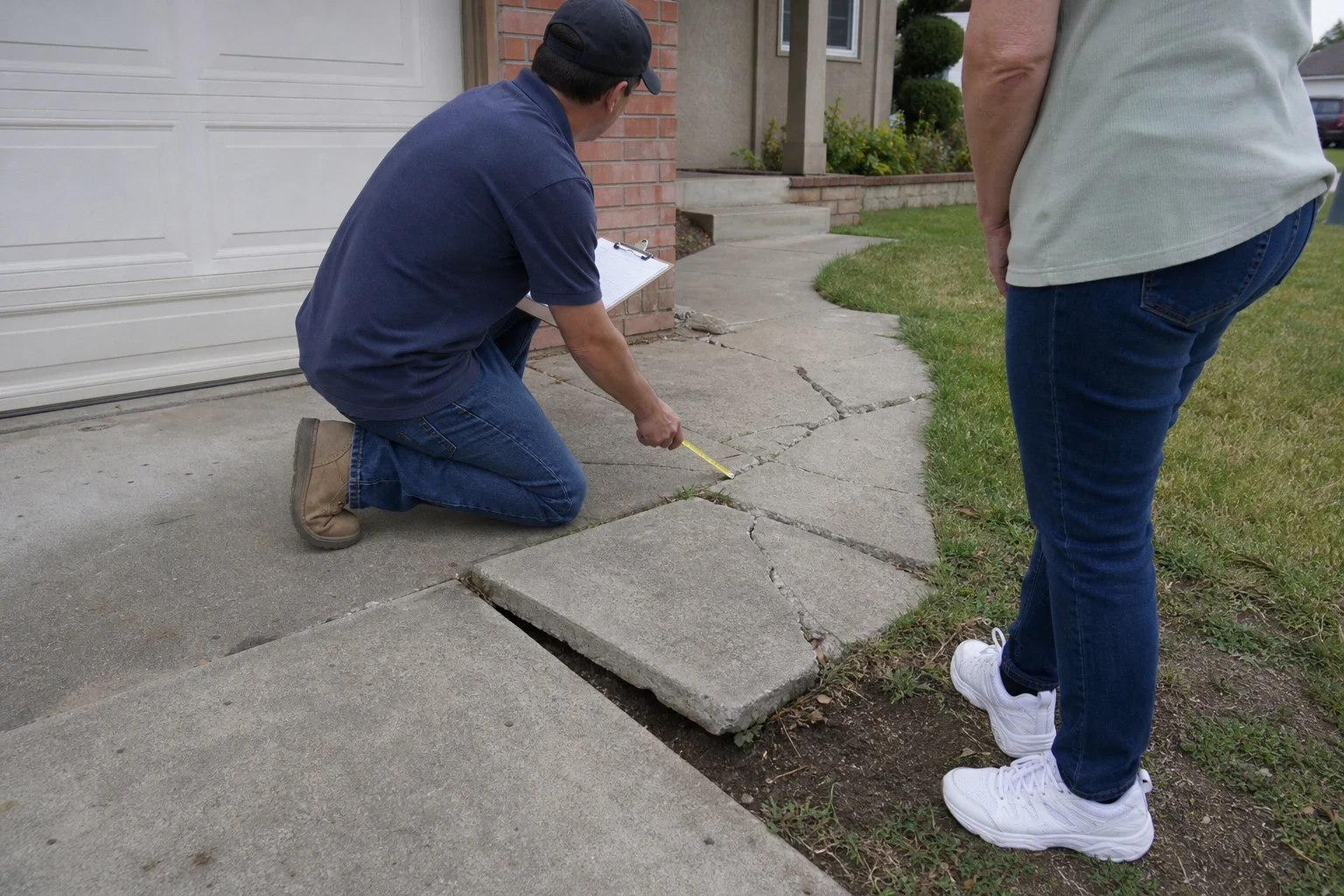
Tree roots and poor base can heave a slab into sections. Past a point, tearing it out and starting fresh makes more sense.
Weeds in every joint
If you spend weekends pulling weeds from cracks and paver gaps, a poured surface with planned joints cuts that way down.
What moves the price of a courtyard
Size matters, but in a courtyard, access and drainage often move the number more. Your written estimate breaks out each of these so you can see where the money goes.
Getting concrete in
A wide gate lets us wheel or chute it in. A courtyard reached only through the house usually needs a pump, which adds cost.
What comes out first
Bare dirt is the simplest. Old pavers, a broken slab or roots add demo and haul-off time.
Drainage
A single area drain is a modest add. A long channel drain or a pipe run under a walkway is more work.
Finish choice
A broom finish is the most basic. Color, exposed aggregate and stamping each add material and labor.
Permits
Plain flatwork often needs no permit, but drain tie-ins can. We check with the city and tell you up front.
How a courtyard job runs
- 1
Walk-through and measuring
We measure, check how water moves now, and look at how we'll get concrete in. Then we give you a written estimate with each part listed.
- 2
Demo, grade and form
We remove what's there, compact the base, set the forms to the slope we planned, and lay in drains and reinforcement. You can see the layout before anything is poured.
- 3
Pour and finish
Pour day is usually one day. When there's no side access, we pump the concrete over or through so the truck never touches your home. Then the crew finishes the surface and cuts the joints.
- 4
Cure and hand-off
We keep the slab damp or sealed while it cures, more so on a dry, windy Santa Ana day when concrete loses water fast. We walk it with you and go over care before we leave.
Courtyard questions we hear
How soon can we walk on the new courtyard?
Light foot traffic is usually fine after a day or two. Wait about a week before setting heavy planters or furniture on it. Concrete keeps gaining strength for weeks, so go easy early on.
Can you pour right up against the house?
Yes, with a foam isolation strip between the slab and the wall. We also keep the surface below the weep screed on stucco walls so the wall can still dry out.
Our courtyard is only reachable through the house. Is that a problem?
No. We run a pump hose over the roof or wall, or along a protected path, so nothing has to be wheeled across your floors. It does add to the cost, and we'll show that line on the estimate.
Will the concrete crack?
All concrete can crack as it shrinks and the ground moves. That's why we cut control joints in a planned pattern, so cracks follow the lines instead of running across the middle. A good base and proper curing help too.
Can it look like tile or stone?
Yes. We can score it into a tile grid, add color, or stamp a stone pattern. Our Stamped Concrete page goes into the patterns and how they wear.
Ready to sort out your courtyard
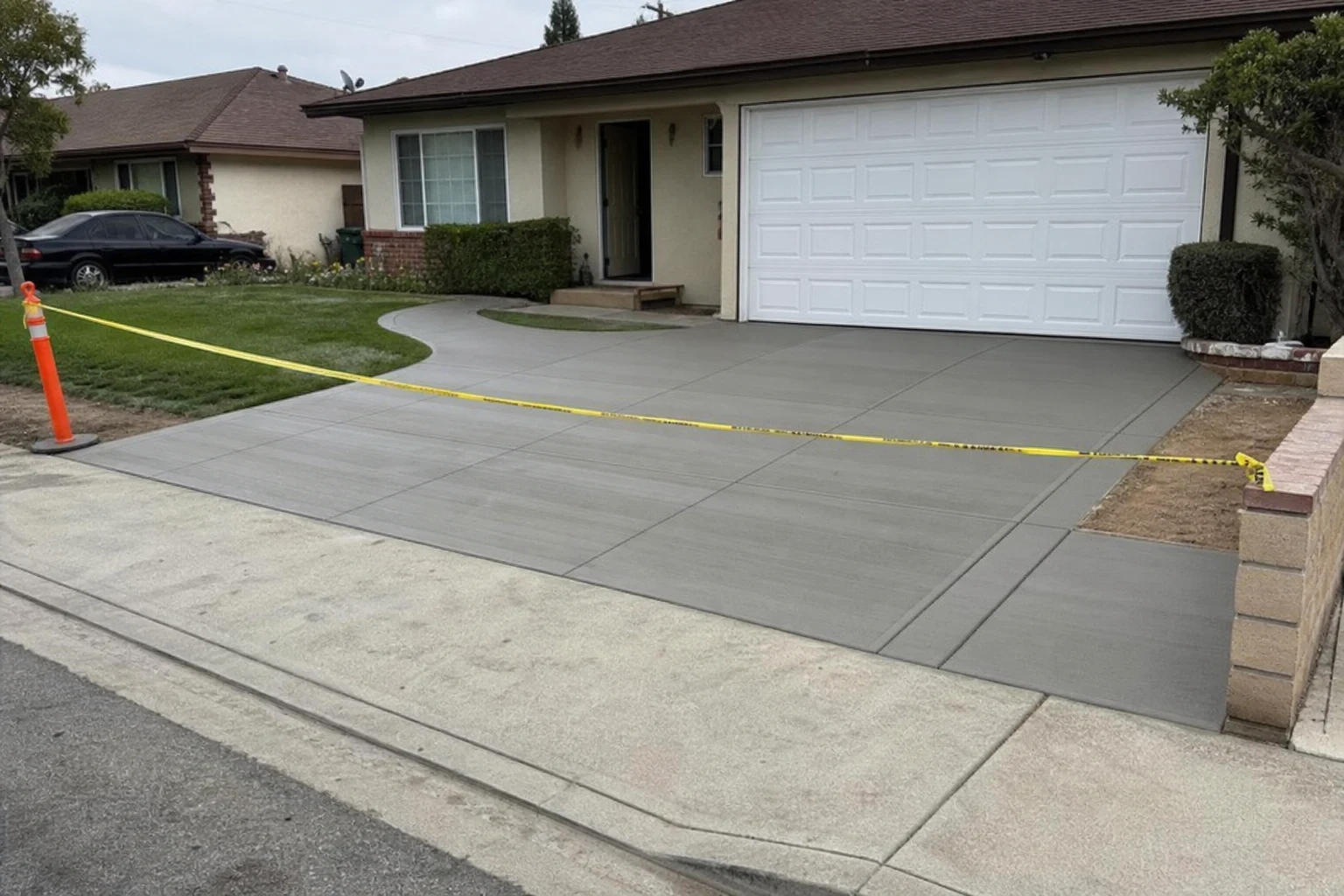
Tell us what the space looks like now and how you want to use it. We'll set up a time to see it and walk you through the options.