ServicesStamped Concrete
Stamped Concrete in Placentia
Stamped concrete gives you the look of slate, flagstone, brick or wood plank in one solid pour. We walk you through patterns, colors and sealers in plain words, so you know what you are picking and how it will hold up at your home.
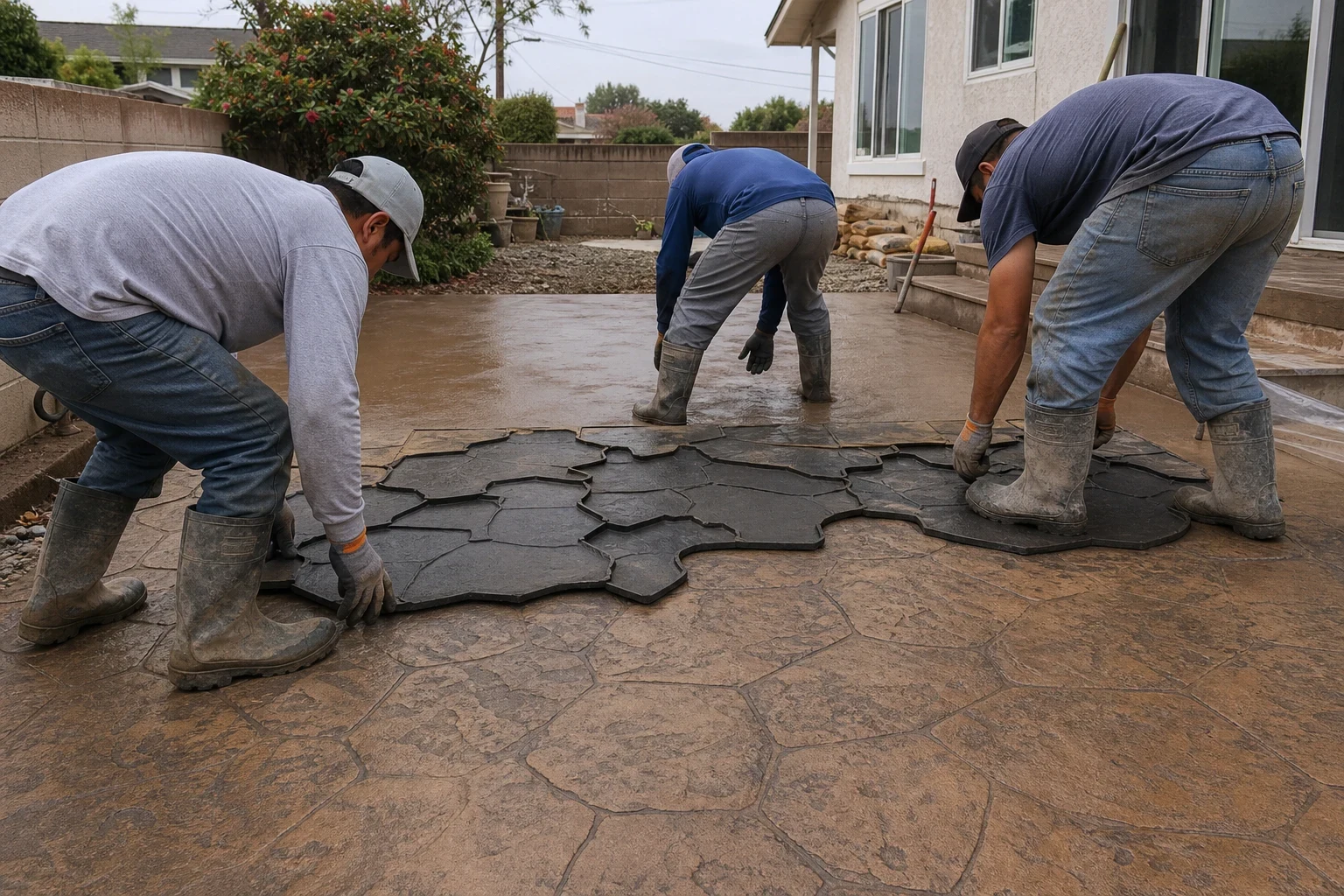
What Stamped Concrete Is and When It Makes Sense
Stamped concrete is regular concrete that we color and press with rubber mats while it is still soft. The mats leave a texture and joint lines, so the finished slab reads like stone or brick. It is one slab, so there are no loose pieces to shift, settle or sprout weeds the way pavers can.
It is a good fit for patios, front walks, courtyards, pool decks and driveways where you want more than plain gray. It is not the cheapest option, and it needs a fresh coat of sealer every few years. We tell you that up front so you can weigh it against a broom finish or exposed aggregate.
If you have an old cracked slab where the new one will go, we tear it out and pour new. Stamping only works on fresh concrete.
What the Work Includes
Demo and haul-off
We break out old concrete, grass or pavers and haul the debris away. You are not left with a pile on the side of the house.
Base prep and grading
We dig to the right depth, compact a gravel base and set the slope so water runs away from your home. Most problems with any slab start with a poor base, so we take our time here.
Forms and reinforcement
We set forms to the shape you picked, curves included, and lay rebar or wire mesh based on what the slab will carry.
Color and pattern
Color goes in the mix, on the surface, or both. A release agent in a second tone gives the low spots that aged, shaded look. Then we stamp the pattern you chose.
Control joints
We cut joints where the slab is most likely to crack and hide them in the pattern lines when we can. That way a crack follows a line you already see.
Wash and seal
After a few days we wash off the leftover release and roll on sealer. We can add a fine grit to the sealer for better footing.
Signs Stamped Concrete Is the Right Call
Your pavers keep shifting
Pavers that rock, sink or grow weeds in the joints get old fast. A stamped slab gives a similar look with no loose pieces.
Plain gray feels unfinished
If your patio or front walk looks like a sidewalk, color and texture can change the whole yard without a new layout.
You want stone without the stone price
Real flagstone or slate set in mortar costs more and takes longer to install. Stamped concrete gets close to that look in one pour.
The old slab is already coming out
If cracked or heaved concrete has to go anyway, the extra step to color and stamp the new one is smaller than people expect.
You are matching an outdoor project
New pool decks, courtyards and backyard makeovers look tied together when the hard surfaces share one pattern and color.
How a Stamped Concrete Job Goes
- 1
Look and choose
We come out, measure and talk about how you use the space. We show you pattern and color samples and explain how each one wears, how hot it gets underfoot and how much upkeep it needs.
- 2
Prep day
We demo, grade, compact the base and set forms and steel. If the work touches the city sidewalk or the driveway approach, a permit is usually needed and we pull it.
- 3
Pour and stamp
This is the busy day. We pour, add color, spread release and stamp in a short window while the concrete is soft enough to take the texture. The crew works fast and stays on it until the last mat is pulled.
- 4
Cure and seal
We cut joints within about a day. A few days later we wash and seal. You can walk on it in a day or two and drive on a driveway after about a week.
What Moves the Price
Stamped concrete is priced by the job, not off a chart. Two patios the same size can land in different places depending on the site and the choices you make. We give you a written estimate with each part on its own line so you can see where the money goes.
- Size and shape
- More square feet means more concrete and labor. Curves, steps and tight corners take extra forming and hand stamping.
- Pattern and colors
- One color with one release is the simplest. A second color, a border band or a mixed pattern adds time on pour day.
- What comes out first
- Tearing out a thick old slab or roots costs more than stripping sod. Soft or clay-heavy soil may need a deeper base.
- Access
- If the truck can chute straight to the forms, it goes quicker. Narrow side yards may need a pump or wheelbarrows.
- Sealer and grit
- The sealer type and any slip-resistant additive change the finish cost, and they matter most around pools and steps.
Stamped Concrete Questions
Something not covered here? (714) 942-4542
Will stamped concrete crack?
All concrete can crack, stamped or not. What we control is where. A good base, steel and joints cut at the right spacing push cracks into the joint lines, where they mostly blend into the pattern.
Is it slippery when wet?
A smooth, glossy sealer can be. We use textured patterns and can mix a fine grit into the sealer so wet bare feet and shoes grip better. We suggest it for pool decks, steps and sloped walks.
How often does it need resealing?
Plan on every two to three years. Strong sun breaks sealer down and fades the surface color over time. Resealing is a clean, wash and roll job, and it keeps the color looking deep.
Does the color get hot near the pool?
Dark colors soak up heat. Around a pool we steer you toward lighter tans and grays, which stay more comfortable under bare feet on a summer afternoon.
Can you stamp my existing patio?
No. Stamping has to happen while concrete is soft, so the old slab comes out and we pour new. If your current slab is sound, we can talk about whether a new stamped area should match up to it.
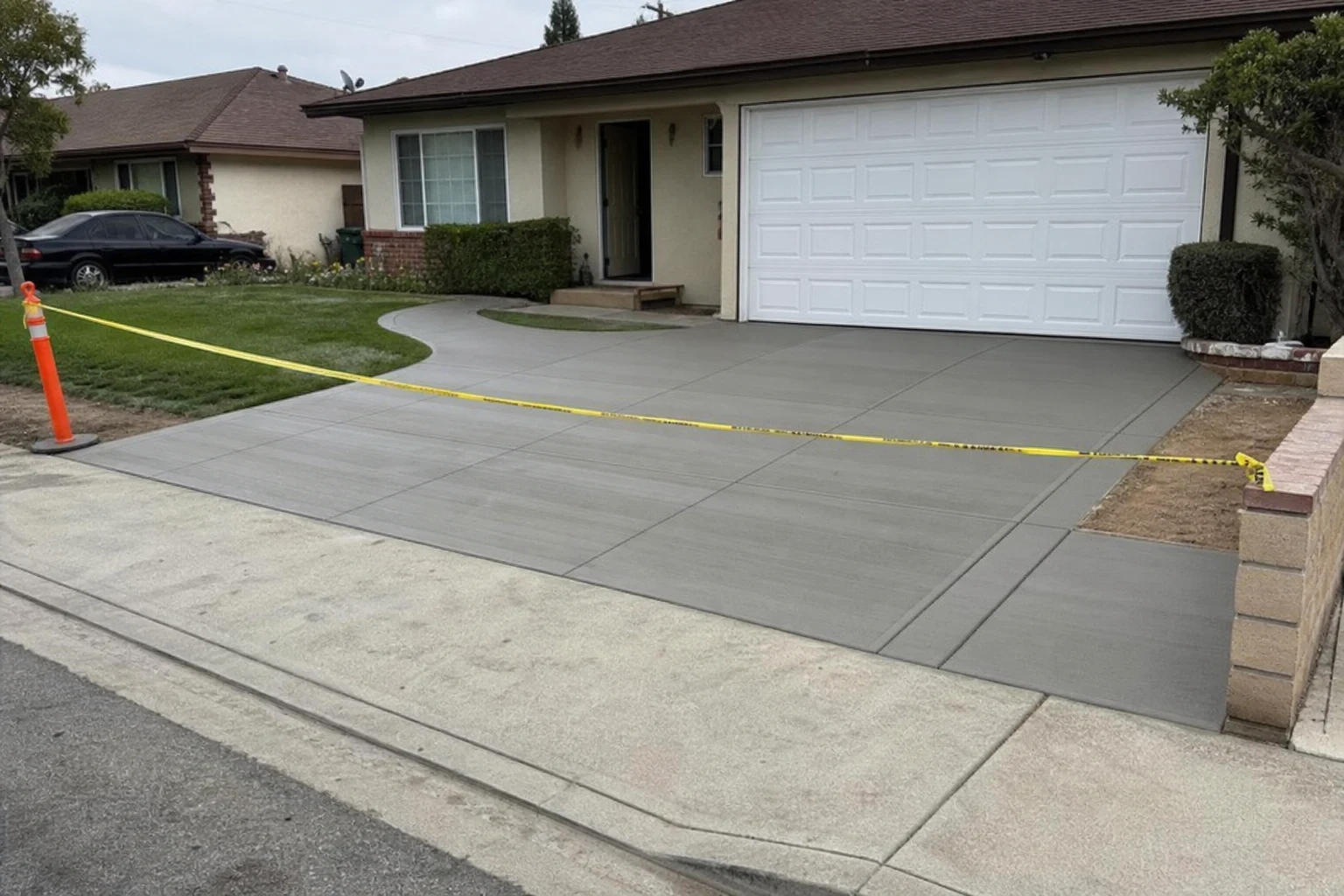
Pick a Pattern With Someone Who Explains It
Tell us about the space and how you use it. We will talk through patterns, colors and sealers and set up a time to come measure.