ServicesConcrete Backyards
Concrete Backyards in Placentia
We pour backyard concrete that drains away from your home, holds up to daily use and fits how your family spends time outside. Before anything is dug, we walk the yard with you and explain each choice in plain words, from slab thickness to finish.
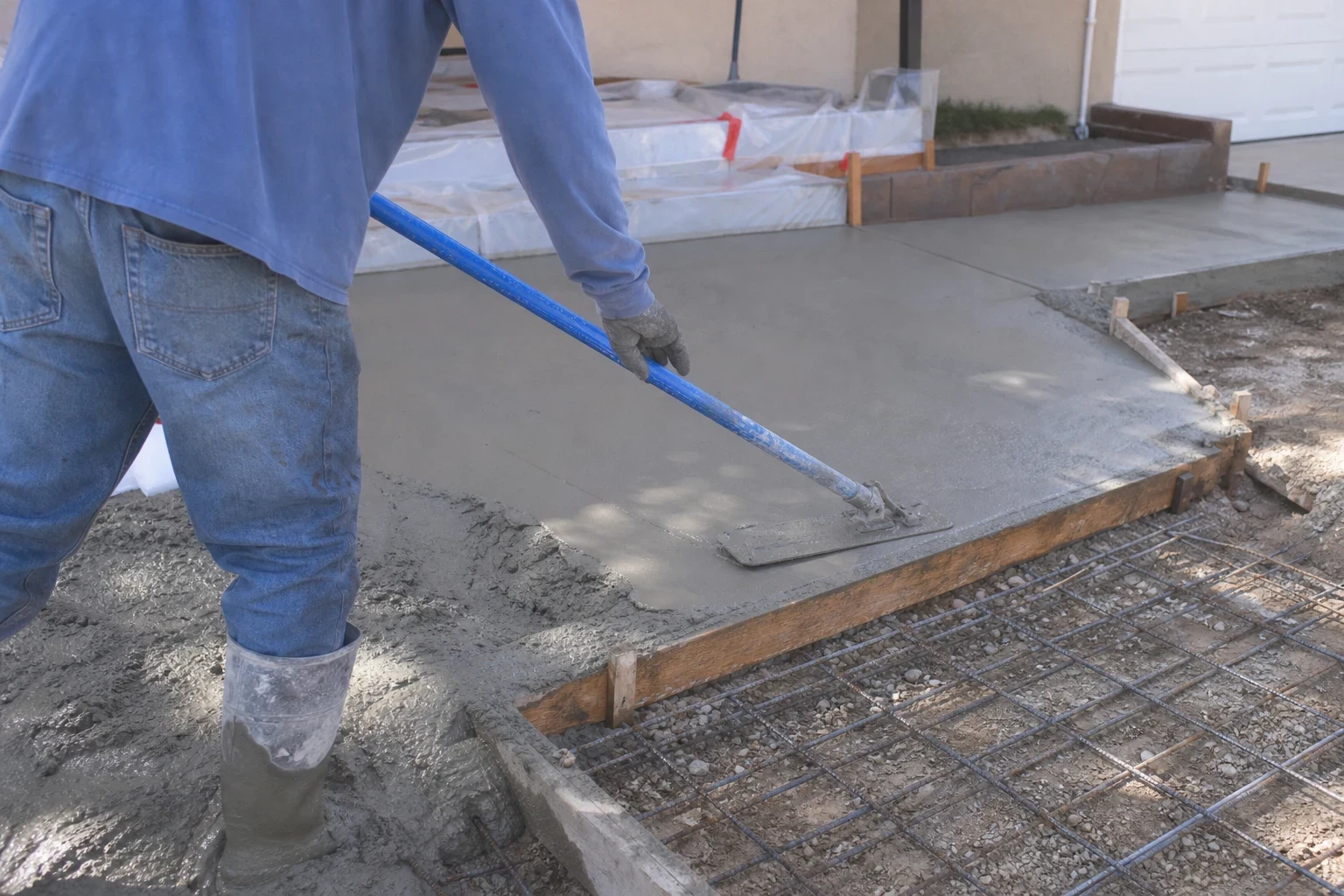
What a Concrete Backyard Job Really Covers
A concrete backyard is more than one big slab. It is usually a mix of areas: a sitting space off the back door, paths to the side gate, maybe a pad for a shed or a barbecue. Each area has its own job, and each one has to slope the right way so water leaves your home instead of pooling against it.
It is the right call when grass will not grow, dirt turns to mud every winter, or old pavers and broken slabs make the yard hard to use. It also makes sense when you want one plan for the whole space instead of patching pieces together over the years.
We tell you what we see, what each option means and what it costs. Then you decide.
What We Handle on a Backyard Pour
Layout and measuring
We mark the areas with paint or string so you can stand in the yard and see the real size. It is much easier to move a line on the ground than to change concrete later.
Demolition and haul-off
Old slabs, pavers, sod and roots come out and leave the property. We dig down to firm soil so the new concrete sits on something solid.
Grading and drainage
We set a gentle slope away from your home, usually about a quarter inch per foot. Where water has nowhere to go, we talk through drains or channels before the pour.
Base, forms and rebar
Compacted base rock goes down first, then wood forms and steel reinforcement. Many soils in this part of Orange County are clay that swells when wet and shrinks when dry, so the base and steel matter.
Pour, finish and joints
We place and finish the concrete, then cut control joints so cracks follow a planned line. You choose the finish, from a plain broom texture to a look covered on our Stamped Concrete page.
Cleanup
Forms come out, edges get backfilled and the work area is swept clean when we leave.
Signs Your Backyard Is Ready for New Concrete
Water sits near the house
If puddles form against your walls or under the back door after rain, the ground slopes the wrong way. New concrete is a chance to fix the grade.
The yard turns to mud
Bare dirt that gets tracked inside every wet season is a sign the space needs a hard surface.
Old slabs are broken and uneven
Heaved sections, big cracks and trip edges are a safety problem. When the damage is widespread, replacing the area is often the only sensible answer.
Pavers are sinking or loose
Pavers that shift and grow weeds between them usually mean the base underneath has failed.
Grass costs more than it gives
Lawn that needs constant water and still looks patchy may be better as concrete with a few planting beds left open.
How a Backyard Job Goes, Step by Step
- 1
Visit and talk
We come out, measure and ask how you use the yard. We point out drainage problems, tree roots and access issues, and explain what each one means for the job.
- 2
Written quote
You get a quote that lists demolition, base, reinforcement, concrete and finish as separate lines. If something is optional, we say so.
- 3
Prep days
We remove the old surface, grade the soil, compact the base, set forms and place rebar. You can look at the layout before any concrete shows up.
- 4
Pour day
The truck or a pump delivers the concrete and the crew places, finishes and edges it the same day. On hot summer days we start early so the concrete does not dry too fast.
- 5
Curing and first use
You can walk on it after a day or two. Wait about a week before setting heavy furniture or a grill on it, and we will tell you when it is ready for more.
What Moves the Price of a Concrete Backyard
No two backyards price the same, so we quote after seeing yours. The biggest drivers are size, what has to come out first and how easy it is to get concrete to the back of the house. We go over each line with you so nothing is a surprise.
- Square footage and thickness
- More area means more concrete, base and labor. Slabs that will carry a spa or a shed may need extra thickness.
- Demolition and soil
- Removing old concrete costs more than removing grass. Soft or clay soil may need extra base rock and compaction.
- Access to the backyard
- A narrow side yard can mean a concrete pump or wheelbarrows instead of a direct pour, which adds time and equipment.
- Drainage work
- Drains, channels or added grading add cost up front but keep water away from your home.
- Finish and color
- A broom finish is the most basic. Color, exposed aggregate or stamped patterns add material and labor.
Backyard Concrete Questions
Something not covered here? (714) 942-4542
Will my new backyard concrete crack?
Concrete can crack as it shrinks and as soil moves. We cut control joints so any cracks follow straight lines where they are hard to see. Good base prep and rebar keep cracks small and help the slabs stay level.
Can I keep some planting areas?
Yes. We can form around trees, leave beds open for plants and shape curves instead of straight edges. We will tell you if a tree's roots are likely to push on the concrete over time.
Do I need a permit for a backyard slab?
Many flat backyard slabs do not need one, but some features can, like work near property lines or anything tied to a structure. We check what applies to your project and tell you before we start.
How is this different from a patio?
A patio is one sitting area. A backyard job often covers the whole space, with paths, pads and side areas planned together. If you only want a seating spot, our Patios page covers that work.
Do I need to be home during the work?
Not the whole time. We need gate access and a clear path, and it helps if you can check the layout before the pour. Keep pets inside until the concrete has set.
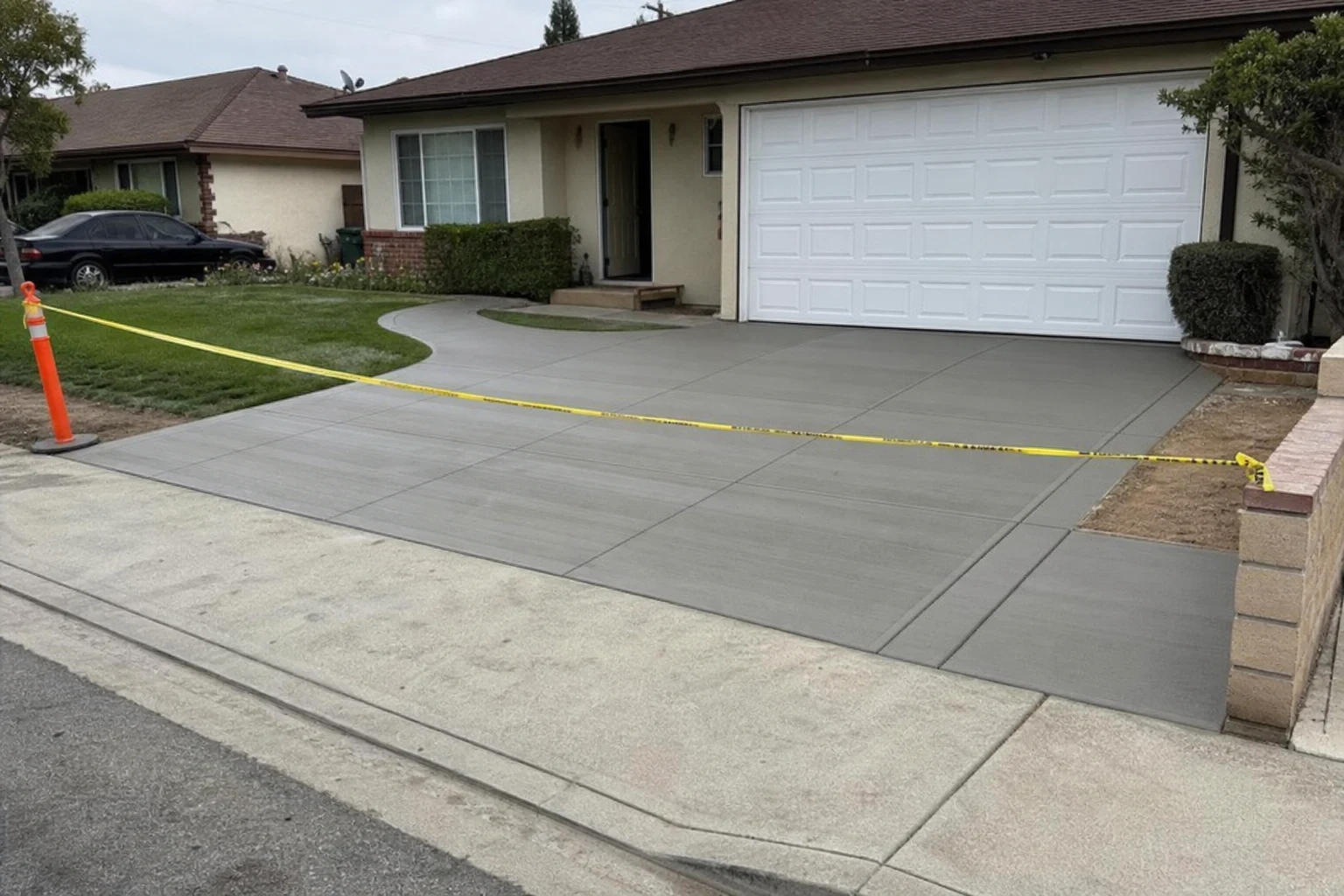
Ready to Plan Your Backyard?
Tell us about your yard and how you want to use it. We will set a time to look at it and explain your options in plain words.